
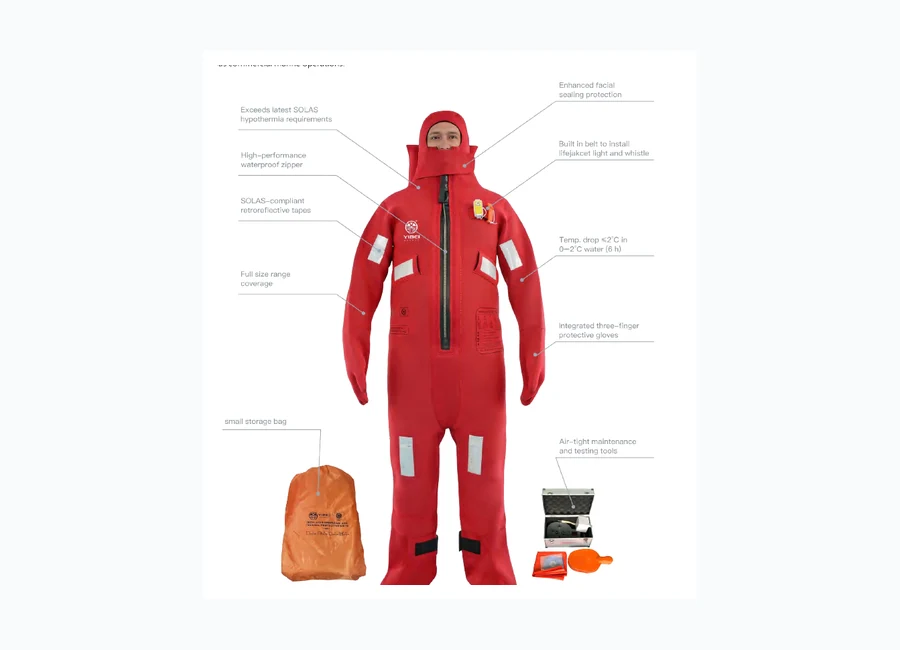
Cold water, not drowning, is what kills most people who go over the side in northern and offshore waters. In water at 0 to 5 °C an unprotected person loses useful hand function within minutes and consciousness within the hour. The immersion suit exists to buy the time a rescue needs. Sea Keepers supplies the YIBEI YBM3 insulated immersion suit: a one-piece neoprene survival suit with integrated hood, gloves and boots, built to the SOLAS and LSA Code requirements for an insulated suit and carried on ferries, offshore units, rescue craft and cargo ships.
What the YBM3 is made of
The suit is cut from premium thickened neoprene, the closed-cell foam rubber used in cold-water diving suits. The material does two jobs at once: it is inherently buoyant, and the gas trapped in the foam insulates the wearer from the water. The outer face is oil-resistant and flame-resistant, so a suit worn through a fuel slick or a burning spill on the surface keeps its integrity. The whole suit is a bright red, which stands out against grey water better than orange on an overcast day, and SOLAS-compliant retroreflective tapes on the chest, arms, hood and legs return a searchlight beam from any angle.
A high-performance waterproof zipper runs diagonally across the front, long enough that the suit can be stepped into and closed in under two minutes by someone wearing ordinary working clothes, which is what the LSA Code asks. The hood has an enhanced facial seal that closes around the face to keep water out of the neck and off the head, where most body heat is lost. Three-finger protective gloves are integrated into the sleeves so there are no loose gloves to lose and no wrist seal to leak, and the boots are part of the suit for the same reason. A built-in belt carries a lifejacket light and a whistle, and the suit comes in a small storage bag that stows in a locker or beside a bunk.
The thermal rating and what it means
The figure that matters on an immersion suit is the temperature-drop test. The YBM3 is rated so that the wearer's core body temperature falls by no more than 2 °C after six hours in calm, circulating water at 0 to 2 °C. That is the LSA Code performance requirement for an insulated immersion suit, as distinct from an uninsulated suit, which is tested over one hour in 5 °C water and is meant to be worn with warm clothing underneath. The maker states that the YBM3 exceeds the latest SOLAS hypothermia requirements.
For the planner the distinction is simple. An uninsulated suit assumes the crew have time to dress warmly first; an insulated suit does not. On a ship where abandonment can come fast, or in waters where six hours is a realistic wait for a helicopter or a lifeboat, the insulated suit is the one to carry.
How many suits SOLAS expects
SOLAS Chapter III, Regulation 32 requires an immersion suit of an appropriate size for every person on board a cargo ship, with suits of a suitable size for every person on watch in remote work stations such as the engine room and the bridge so that no one has to go far to fetch one. The requirement applies in full to ships that do not operate solely in warm climates, which the Administration defines; in practice most international-trading cargo ships now carry a suit per person plus the extra watch-station suits. Passenger ships, under Regulation 22, carry at least three immersion suits for every lifeboat and sufficient thermal protective aids for the people not provided with suits, with additional suits for the crew of rescue boats and marine evacuation systems.
The suits must be stowed where they are readily accessible, with their location clearly indicated, and the LSA Code requires each one to be unpacked and donned without assistance within two minutes, including any associated clothing and lifejacket. A suit that is still in its sealed shipping bag at the bottom of a store is not readily accessible, and a surveyor will say so.
Immersion suit and lifejacket together
An insulated neoprene suit is buoyant and turns an unconscious wearer face up, which is why the LSA Code allows an immersion suit that meets the lifejacket performance requirements to be carried without a separate jacket. Many operators still issue a lifejacket to be worn over the suit so that the muster and abandonment drill is the same whatever the water temperature. For that case we supply the YBA5/F foam lifejacket, which is cut to fit over an immersion suit, and the YBA1 lifejacket light that clips to the YBM3's built-in belt. Ask for the suit, light, whistle and lifejacket as one order so the set matches on the day.
Sizing and the full size range
The YBM3 is offered in a full size range, and the right size is a safety matter rather than a comfort one. A suit that is too large lets water pool in the legs and chest, where it strips heat away; a suit that is too small cannot be closed over clothing and leaves the zipper open at the throat. Take height and weight for the named crew members and order to the maker's size chart. Where a cabin is shared on rotation, choose the size for the larger person and note it on the cabin door. Keep one or two spare suits in the common sizes for supernumeraries and visiting personnel.
Testing, inspection and storage
Immersion suits are checked monthly as part of the LSA inspection and are air-pressure tested periodically, usually every three years for new suits and more often as they age, following the maker's instructions and the IMO guidance on periodic testing. The YBM3 is supplied with air-tight maintenance and testing tools: a pressure tester and sealing caps that let a trained crew member or a service station inflate the suit, seal the openings and watch for a pressure drop that would show a pinhole, a failed seam or a leaking zipper.
Between tests, the routine is the same for every suit. Keep the zipper lubricated with the wax supplied and never force it; a zipper that is dry or salted is the usual reason a suit fails a donning drill. Rinse the suit in fresh water after any wet drill, dry it hanging, away from sunlight and heat, and store it loosely in its bag with the zipper open a hand's width so the slider is not under tension. Check the reflective tapes, the glove and boot seams and the face seal for cracking, and record the inspection in the planned maintenance system against the suit's serial number.
For the business buyer
Count the suits from the safety equipment certificate and the crew list, not from the last invoice, and add the watch-station suits for the engine room and bridge that the regulation requires on top of the per-person count. Ask for the MED certificate, the Declaration of Conformity and the size chart with the quotation. Suits are often bought in one batch when a ship is delivered and then replaced piecemeal, which leaves a mix of makers and sizes that complicates testing; a planned replacement of the full outfit in one order is usually cheaper per suit and simpler to certify.
For technical experts
Check that the label on each delivered suit shows the insulated rating and the MED wheelmark, and record serial number, size and date of manufacture before the suits are distributed to cabins. Fit a lifejacket light and whistle to every suit on receipt rather than leaving them in the box. Run a timed donning drill with the suits actually issued, in the clothing the crew will be wearing, and note which crew members need a different size. Include the suits in the three-year pressure-test schedule from the date of manufacture, not the date of purchase, since suits can sit in a supplier's stock before delivery.
Product comparison
Compare immersion suits on five points: insulated versus uninsulated rating, the fabric (neoprene, which insulates by itself, against a coated nylon shell that relies on the clothing underneath), the closure (a single front zipper is faster than a combination of zip and velcro flaps), whether gloves and boots are integrated, and what test kit and documents come in the box. Uninsulated suits are lighter and cheaper and have their place on ships trading in temperate waters where the crew can dress before abandoning. For cold water and fast abandonment, an insulated neoprene suit such as the YBM3 is the better choice.
Request pricing for the YBM3 immersion suit, lifejacket lights and the lifejackets that go with it through our quote form, and tell us the vessel type, the number of persons on board, the watch stations to be covered and the sizes of the crew so we can quote a complete outfit.
Request a YBM3 immersion suit quotationWant the full specification pack or a delivery quotation?
Enquire about the ferry