
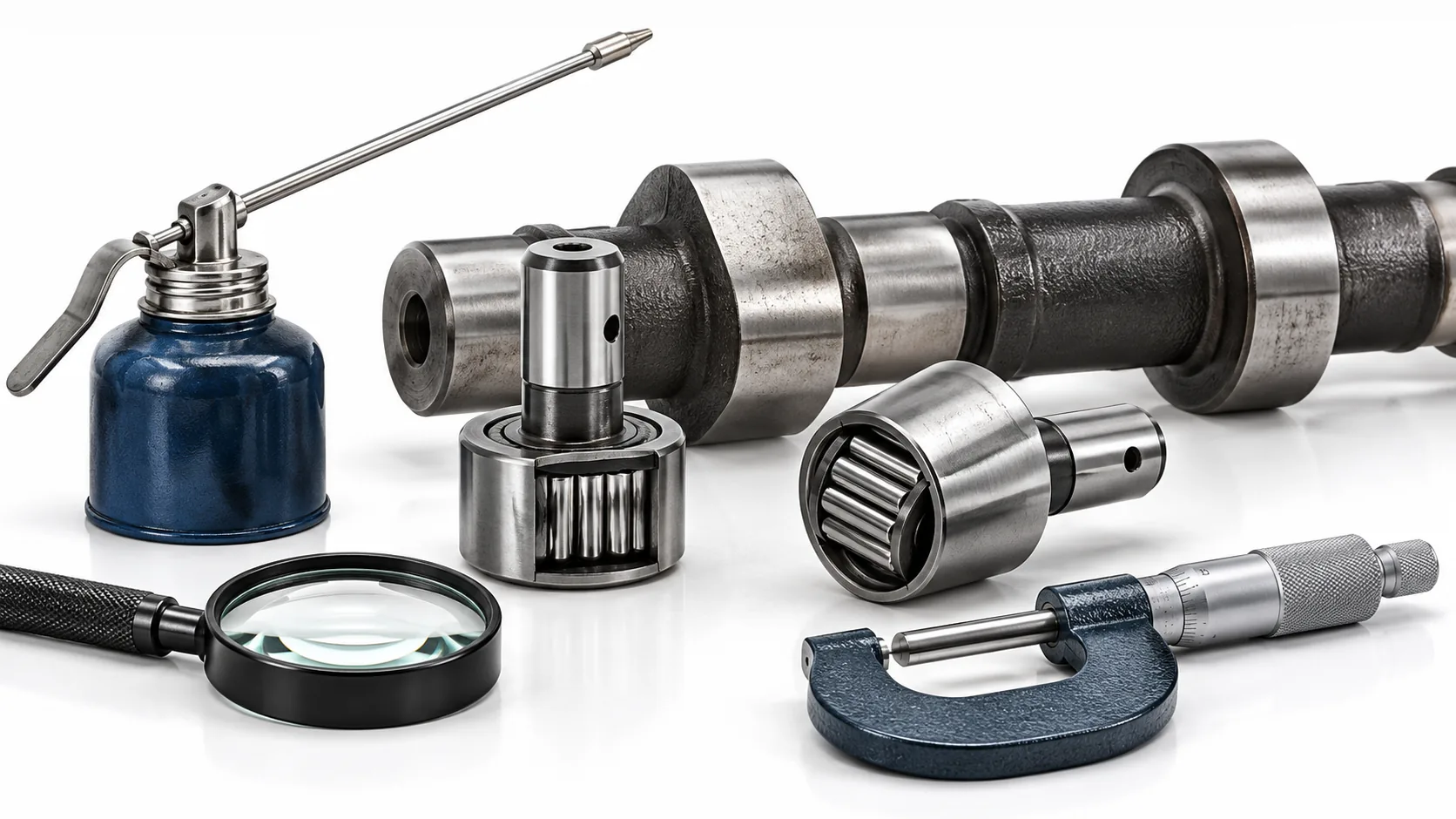
AI-generated editorial illustration.
A cam follower converts the rotating profile of a camshaft lobe into the movement that opens a diesel engine valve. The Sea Keepers approved catalogue records the Perkins SE8M needle-bearing cam follower as SK-00016 for specified 4000 Series engine applications. Because the follower and cam lobe run as a contact pair, replacing one without inspecting the other can leave the cause of the failure inside the engine. This guide covers the checks that support a reliable replacement and an accurate parts enquiry.
How a roller follower carries the load
As the cam lobe turns, the follower roller carries the spring and combustion-related loads into the pushrod and rocker mechanism. Needle rollers inside the follower reduce sliding friction at the pin, while the curved outer roller surface follows the lobe. Oil must reach the bearing and contact track continuously. Wear at the outer surface, pin or needles changes valve lift and timing, increases lash and can release hard metal debris into the lubrication system.
Confirm the engine build before ordering
Perkins 4000 Series engines exist in many cylinder configurations, ratings and build lists. A shared engine-family name is not enough to confirm a valve-train component. Record the complete engine type, serial number and build list from the nameplate, locate the follower on the correct parts-book illustration and confirm SE8M against that build. Also note the cylinder position, quantity required and whether the parts list specifies associated pins, guides or retaining hardware.
Read the symptoms before dismantling
A ticking valve train, repeated lash increase on one valve, reduced cylinder contribution or unusual metal in the oil filter can indicate follower or cam wear. Record valve-lash readings by cylinder before dismantling and, where access allows, compare valve movement with neighbouring positions. These observations help separate a follower problem from wear at the rocker button, pushrod, valve bridge or camshaft bush.
Inspect the roller and needle bearing
Clean the follower without spinning it with compressed air. Turn the roller slowly by hand and feel for roughness, tight spots or radial play. Examine the running track under strong light and magnification for pitting, spalling, scoring, flat areas and blue heat marks. Check the pin and retaining surfaces, and keep the follower identified to its original cam lobe. Any surface break-up, stiffness or measurable looseness is a replacement condition, not something that a lash adjustment can correct.
Inspect the matching cam lobe
The lobe should show a smooth, continuous contact pattern. Pitting, a ridge across the nose, scoring or loss of the original profile means the camshaft needs dimensional assessment before a new follower is fitted. Compare lobe lift with an unworn position using the method in the service manual and inspect adjacent followers for the same pattern. A damaged lobe can destroy a new roller quickly, while a seized roller can flatten an otherwise serviceable lobe.
Find the lubrication cause
Trace the oil supply from the main gallery through any drilled passages to the follower location. Look for sludge, sealant, carbon or metallic debris that can restrict flow, and confirm the oil grade, pressure history and service interval. Cut open the removed filter where workshop procedure permits and inspect it for bearing material. If a follower has broken up, clean the affected galleries and inspect downstream bearings before returning the engine to service.
Installation and valve-train checks
Lubricate the follower and cam lobe with the product specified by the maker, install the follower in the correct orientation and renew retaining parts where required. After the valve train is assembled, set lash using the cold or hot condition and firing positions stated in the Perkins procedure. Turn the engine through at least two complete cycles with the barring gear, confirm free movement and recheck the settings before starting. Monitor oil pressure and valve-train noise during the first run and verify lash again after the prescribed bedding period.
Replace by evidence, not appearance alone
A fleet may choose to renew followers as a set during a planned camshaft overhaul, while a local repair may replace only positions that fail measured limits. Base that decision on running hours, lobe condition, oil analysis and the maker's overhaul scope. Keep removed parts labelled by cylinder and valve so the wear pattern can be compared and the next overhaul can be planned from evidence rather than memory.
Send a complete enquiry
State the Perkins engine model, full serial number and build list, SE8M reference, Sea Keepers code SK-00016, cylinder and valve position, quantity, camshaft and follower-housing references, observed wear, valve-lash history, required documentation and delivery port. Include clear photographs of the roller track and cam lobe. The approved product page and linked valve-train guides provide the catalogue identity and related inspection context.
For the business buyer
Confirm the intended vessel or facility, operating environment, quantity and required approval before requesting a quotation. Capacity, coverage and service interval should be matched to the risk rather than selected by headline price.
For technical experts
Verify the delivered model against the maker reference, rating, dimensions, materials, operating limits and certification scope. Record the serial or batch number and retain the manufacturer datasheet, declaration, test report and maintenance instructions in the vessel file.
Product comparison
Compare alternatives on certified performance, compatibility, installation requirements, inspection interval, spares availability and total life-cycle cost. A lower unit price is not a like-for-like comparison when approval documents or service support differ.
Request a Perkins SE8M cam follower quotationWant the full specification pack or a delivery quotation?
Enquire about the ferry