
AI-generated editorial illustration.
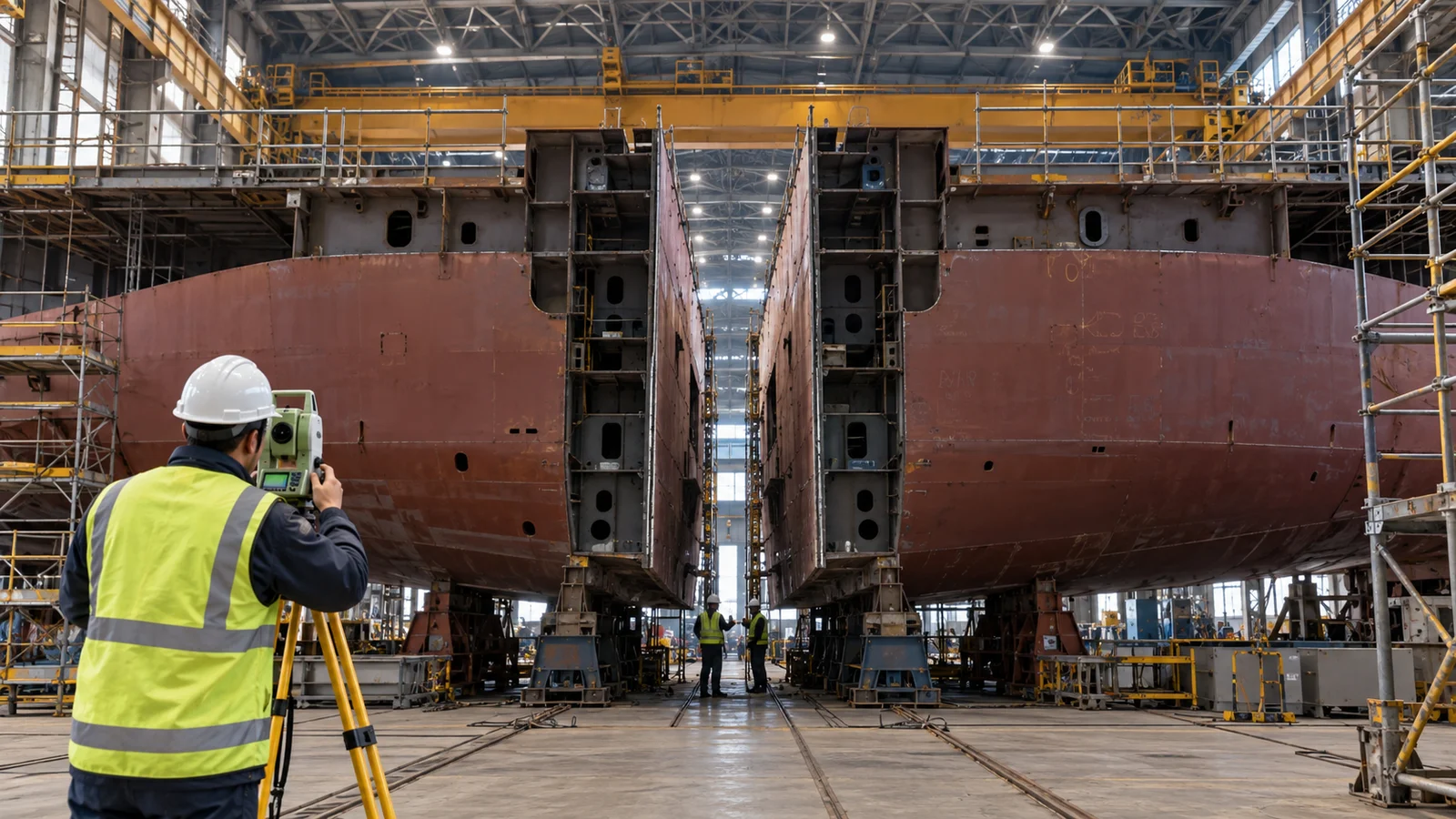
Why Steel Vessel Blocks Do Not Fit Together During Assembly is a commercial problem, not just a definition. Misfit usually comes from datum drift, cumulative tolerance, weld shrinkage, distorted panels, incorrect survey control or a revision mismatch between adjoining blocks. The final gap is only the symptom.
For the business buyer
Block assembly and construction managers need a clear decision path: define the asset and operating consequence, identify the information missing from the request, and measure the effect on cost, schedule, safety and compliance. Use common datums, diagonal checks, controlled sequence, survey hold points and a block interface register. Sea Keepers can investigate the assembly chain and propose a corrective plan.
For technical experts
Record the approved drawing or equipment reference, revision, material or performance requirement, inspection point, certificate and acceptance criterion. Keep the technical decision with the responsible naval architect, chief engineer, class or flag authority where applicable. Do not substitute a grade, model or certificate on a name match alone.
Comparison before purchase or fabrication
Local grinding can close a small fit-up issue; repeated cutting and re-welding hides the cause and can damage coating, alignment and structural continuity. Measure before correcting.
Sea Keepers engineering and procurement response
Use common datums, diagonal checks, controlled sequence, survey hold points and a block interface register. Sea Keepers can investigate the assembly chain and propose a corrective plan. The team can review the specification, prepare an RFQ, coordinate suppliers, check documentation and connect the decision to naval architecture, structural engineering, production CAD, shipbuilding, repair or marine equipment supply.
Discuss your marine procurement or engineering projectWant the full specification pack or a delivery quotation?
Enquire about the ferry