
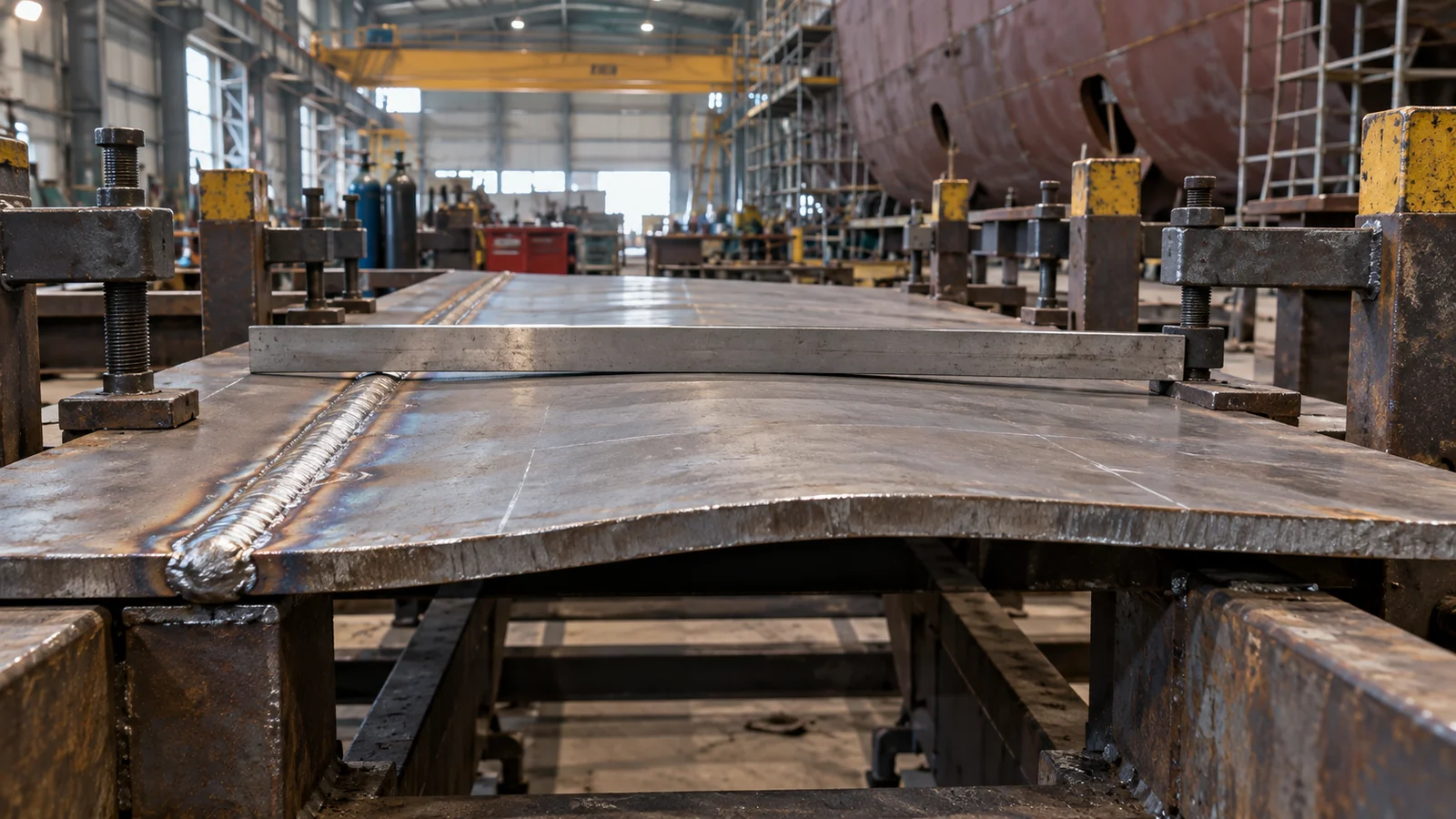
AI-generated editorial illustration.
When a hull plate pulls out of shape after welding, the visible defect is usually the final result of heat input, restraint and sequence interacting across the panel. Correcting it with uncontrolled flame heating or force can introduce new stresses and consume the production margin. The practical answer begins in design and continues through fit-up, welding and inspection.
What it means for a shipyard manager
Distortion changes whether frames, brackets and adjoining blocks fit. That creates grinding, gouging, re-welding and crane moves, so the cost is measured in labour and schedule as well as steel. Panels with long one-sided welds, thin plating, large openings or uneven restraint are especially sensitive. A production team should identify those risk panels during the work-pack review instead of waiting for dimensional inspection to find them.
The engineering mechanism
The weld zone expands when heated and contracts as it cools. If the surrounding plate restrains that contraction, residual stress and angular, longitudinal or buckling distortion remain. Heat input is governed by current, voltage, travel speed and process efficiency; a slower pass or oversized fillet can put more energy into the panel than the approved welding procedure needs. Material grade, thickness and joint geometry also affect the result.
Controls that work
Use a qualified welding procedure, controlled consumables, balanced welds and a planned sequence that distributes heat. Tack spacing, strongbacks and temporary attachments should restrain the panel without preventing the contraction the design expects. Measure plate flatness and block diagonals at defined hold points, and record corrections so the same geometry is not repaired repeatedly. IACS welding requirements cover the approval of welding consumables and procedures; the yard's class-approved system must govern the final method.
Comparing correction methods
Mechanical correction is predictable when the panel and access allow it, while local line or spot heating can be effective only when temperature, location and sequence are controlled. Random heating may reduce one measurement and increase residual stress elsewhere. Replacement is sometimes cheaper than repeated repair on a critical panel. Sea Keepers' structural engineers can assess the drawing, welding plan and measured deviation before the yard chooses a correction method.
For a fabrication review, provide the approved structural drawing, steel grade and thickness, welding procedure, distortion readings and photographs. Sea Keepers can connect structural design, production CAD and construction support into one corrective plan.
Discuss your marine procurement or engineering projectWant the full specification pack or a delivery quotation?
Enquire about the ferry