
AI-generated editorial illustration.
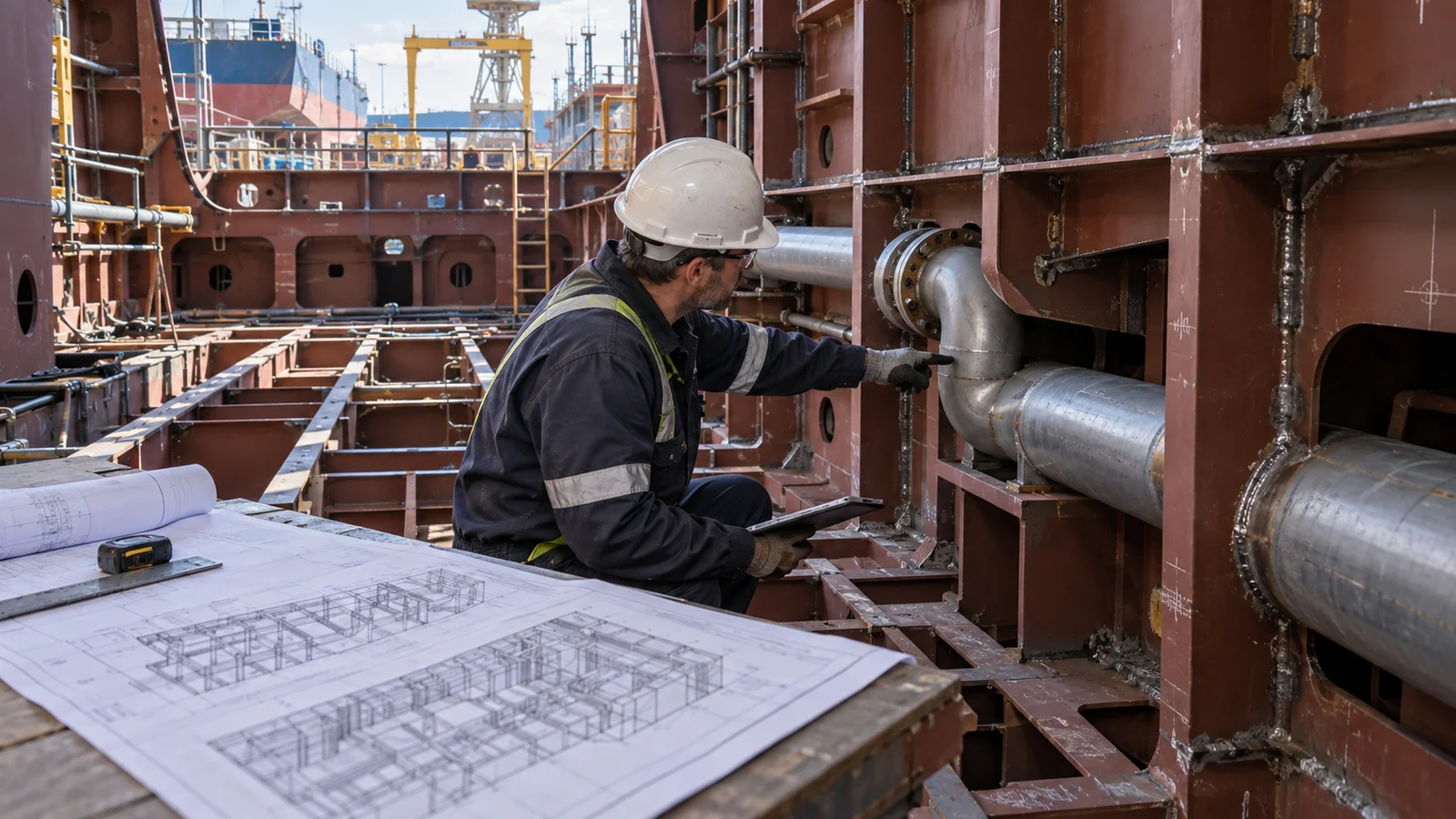
A design can satisfy the calculation and still fail at the workshop. The common causes are inaccessible welds, unclear datum control, parts that cannot be cut or lifted as drawn, tolerances that stack across a block, and materials that are unavailable on the required schedule. Design-for-manufacturing brings those production realities into the engineering decision before steel is cut.
For owners and project managers
Ask the design team how the vessel will be built, inspected, coated, transported and maintained. A slightly heavier bracket with a clean weld path may cost less than a light bracket that forces awkward access and repeated repair. Confirm that the production sequence, lifting limits, panel sizes and procurement lead times were considered in the concept—not added after the yard reports a problem.
For naval architects and production engineers
The 3D model, structural calculations and production drawings must share the same coordinate system and revision. Define datums, assembly tolerances, weld access, edge preparation, cut-outs, drainage, temporary attachments and inspection points. Use clash detection before release, and make the nesting plan part of the design review so plate dimensions and standard profiles are available in the required grade and thickness.
3D CAD versus 2D production drawings
A 3D model is strong for interfaces, clash detection and spatial review. A 2D production drawing remains essential for dimensions, weld symbols, tolerances, material marks and shop-floor instructions. They are complementary deliverables. Releasing a model without controlled production drawings leaves fabricators to infer intent; releasing drawings without checking the model hides access and assembly clashes.
Comparing late redesign with buildability review
Late redesign preserves the original concept but usually affects released drawings, material orders and completed work. A buildability review costs engineering time early and can identify a non-standard profile, inaccessible weld or impossible block split before procurement. Sea Keepers connects hull design, 3D CAD, production CAD, structural engineering and construction support so the decision is made with both engineering and fabrication consequences visible.
Bring the general arrangement, structural model, production drawings, material schedule and yard constraints to a design-for-manufacturing review. The output should be a marked-up release list with owners, dates and measurable acceptance criteria.
Discuss your marine procurement or engineering projectWant the full specification pack or a delivery quotation?
Enquire about the ferry