
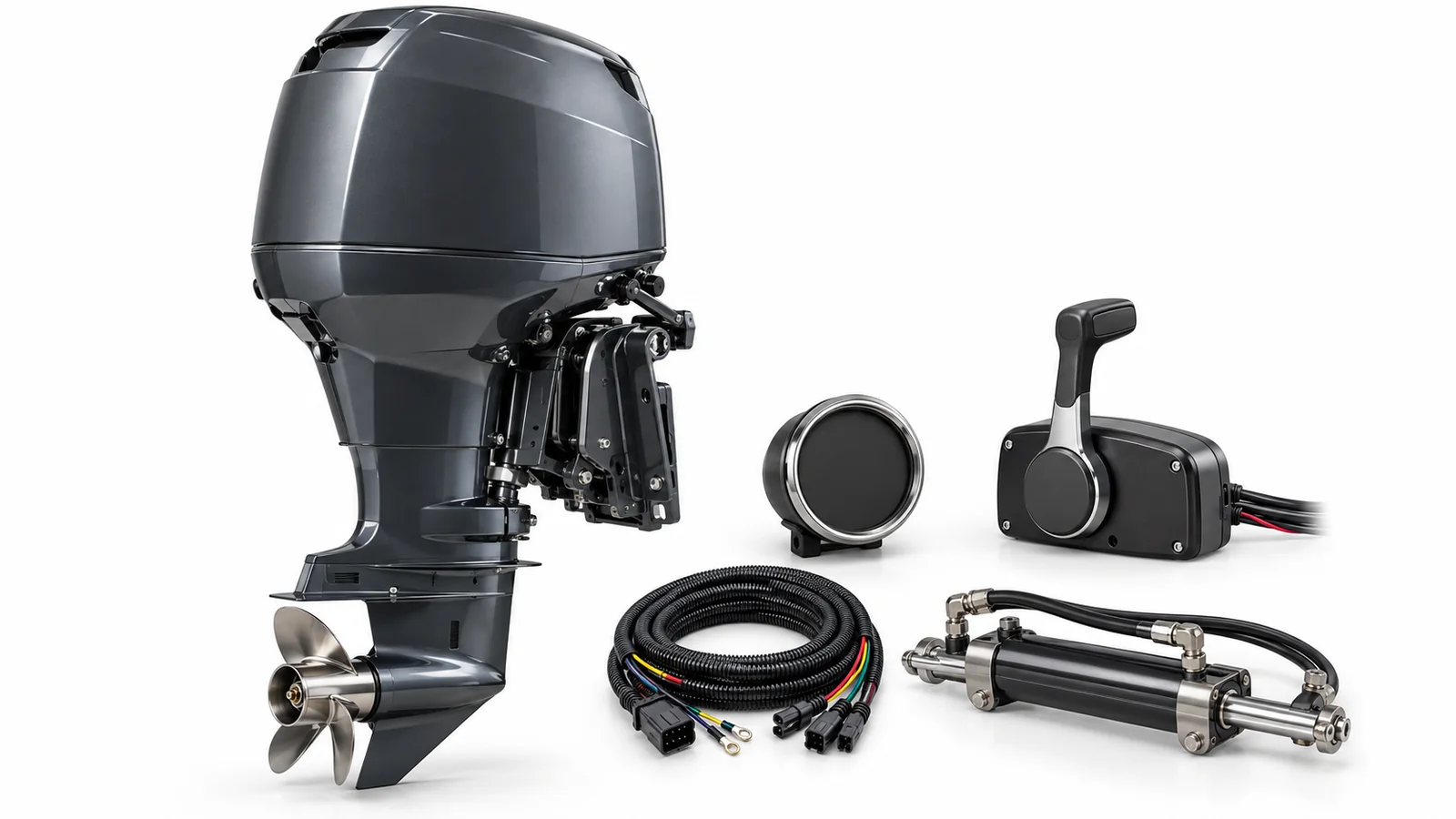
AI-generated editorial illustration.
A 90 HP four-stroke outboard sits in the power band used by tenders, pilot and crew boats, survey launches, aquaculture workboats and small patrol craft. The Sea Keepers approved catalogue records the Mercury Marine FourStroke 90 HP as SK-00002 with electronic fuel injection, electric starting, water-cooled operation and a supplied configuration that includes a 20-inch (508 mm) shaft, throttle control, tachometer, engine harness and hydraulic power steering. This guide explains how to turn that record into an order that fits the boat rather than one that only matches the horsepower.
Match the shaft length to the transom
The approved record specifies a 20-inch long-shaft version. Measure the transom from its top edge to the bottom of the hull at the centreline and compare it with the maker's shaft-length table before accepting that figure. A shaft that is too short lets the propeller draw air in turns and chop, while a shaft that is too long adds drag and spray. The anti-ventilation plate should sit close to the hull bottom in the position the manufacturer specifies, and a jack plate or transom modification changes the answer.
Choose the gear ratio for the hull and duty
The record lists a standard 2.07:1 gear ratio and a 2.38:1 Command Thrust version. The lower-geared version with its larger gearcase suits heavier hulls, pontoons and load-carrying workboats that need thrust at low speed, while the standard ratio suits light planing hulls. State the hull type, loaded displacement, expected cruising speed and whether the boat tows, pushes or carries cargo so that the supplier proposes the right version and a propeller that lets the engine reach its full-throttle range of 5,000 to 6,000 RPM when loaded.
Confirm what the rigging kit includes
An outboard quotation should list every rigging item or clearly exclude it. From the approved configuration, confirm the throttle and shift control box, the tachometer, the engine-to-helm harness and its length, and the hydraulic steering parts: helm pump, steering cylinder, hoses and fluid. Add the key switch and panel, trim gauge, battery cables, fuel line with primer bulb, water-separating fuel filter and propeller if they are needed. Say whether the boat has one helm station or two, because dual-station control and gauge kits are different items.
Check the boat-side systems
A petrol outboard needs a fuel system in good condition: clean tank, correct hose grade, a water-separating filter and a vent that does not admit spray. The starting battery must meet the maker's cranking specification, and cable size should suit the run length. Cooling is raw water through a thermostat, so plan for freshwater flushing after saltwater use and check the telltale stream at every start. If the vessel previously carried a two-stroke engine, confirm that the fuel system, battery and transom are suitable for the four-stroke.
Weight and transom rating
The record gives a dry weight of approximately 163 kg for the lightest listed version. Compare that with the builder's plate on the hull, which states the maximum rated horsepower and engine weight, and inspect the transom for softness, cracking around the clamp area and corrosion of any reinforcing plate. Exceeding the plate rating affects stability, insurance and class or flag requirements on commercial craft.
Plan service items by running hours
Four-stroke outboards are maintained on a schedule expressed in running hours and calendar time in the maker's manual, beginning with a break-in period. Typical items include engine oil and filter, gearcase lubricant, fuel filter, water-pump impeller, thermostat, spark plugs, sacrificial anodes, propeller hub and the steering and trim systems. Vessels that operate away from dealer support should carry the common service parts and the special tools the manual calls for, and keep an hours log so that the next service is planned rather than reactive.
Documentation, warranty and commercial use
Record the engine serial number and the serial numbers of the control and steering components at delivery, and file the owner's manual, declaration of conformity or emissions certificate where the flag or port state requires one, and the warranty terms. Commercial and rental use often carries different warranty conditions from private use, so state the intended duty when requesting the quotation.
Send a complete enquiry
Include the boat type and length, hull form, measured transom height, single or twin installation, required controls and steering, gauge preferences, propeller requirements if known, battery details, intended duty, quantity, delivery port and any class or flag documentation needed. The approved product page for SK-00002 and the related guides linked below provide the catalogue identity and the wider parts-planning context for the vessel.
For the business buyer
Confirm the intended vessel or facility, operating environment, quantity and required approval before requesting a quotation. Capacity, coverage and service interval should be matched to the risk rather than selected by headline price.
For technical experts
Verify the delivered model against the maker reference, rating, dimensions, materials, operating limits and certification scope. Record the serial or batch number and retain the manufacturer datasheet, declaration, test report and maintenance instructions in the vessel file.
Product comparison
Compare alternatives on certified performance, compatibility, installation requirements, inspection interval, spares availability and total life-cycle cost. A lower unit price is not a like-for-like comparison when approval documents or service support differ.
Request a Mercury 90 HP outboard quotationWant the full specification pack or a delivery quotation?
Enquire about the ferry