
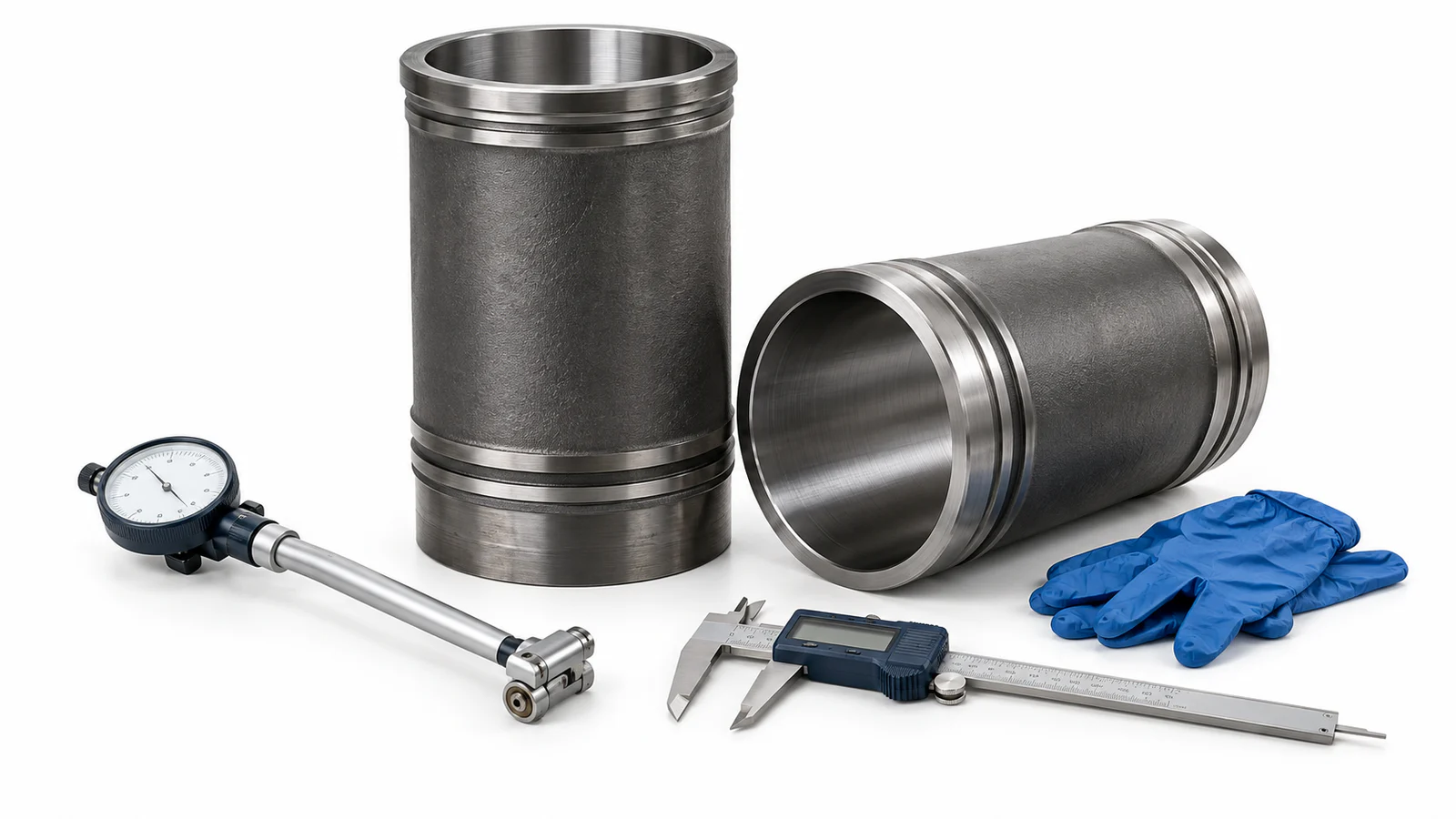
AI-generated editorial illustration.
A cylinder liner is the replaceable working surface inside an engine cylinder. It must contain combustion pressure, transfer heat into the cooling structure and provide the piston rings with a controlled surface throughout thousands of running hours. A liner can look correct beside the removed component and still be wrong in bore, flange, seal-groove or material detail. This guide explains the checks that belong between an approved catalogue reference and installation on board.
Begin with the engine identity, not the dimensions
Record the engine maker, model, complete serial number, arrangement or build number and application before comparing parts. The Sea Keepers approved catalogue lists Cat cylinder liner 126-0739 as SK-00001 and records grey flake iron as its material. That reference is the starting point; final fitment still has to be confirmed against the maker's parts information for the specific engine arrangement. A measured bore alone cannot identify the correct liner because engines can share nominal bore sizes while using different flanges, seals or finished dimensions.
Inspect the removed liner before cleaning away the evidence
Photograph the liner as removed and mark its cylinder position. Look for vertical scoring, polished areas, cavitation pits, corrosion around the water side, fretting below the flange and deposits around the lower seals. Note the piston and ring condition from the same cylinder. These observations help separate normal wear from lubrication failure, coolant treatment problems, distortion or debris, so the replacement is not exposed to the same unresolved cause.
Measure bore, ovality and taper
Use a calibrated bore gauge at the heights and directions specified by the engine manual. Record each reading rather than only the largest one. Ovality compares readings across different directions at one height; taper compares readings from top to bottom. Measurements should be taken at a controlled temperature after the liner is clean. Compare the results with the maker's service limit and keep the sheet with the overhaul record.
Check flange and block landing surfaces
The liner flange controls its vertical position and contributes to cylinder-head sealing. Measure flange thickness and projection with the liner seated as specified, then inspect the counterbore or landing in the block for corrosion, fretting and damage. Uneven projection across cylinders can overload a head gasket even when every new liner has the correct part number. Any machining or shimming must follow an approved repair procedure.
Confirm seals, grooves and supporting parts
A wet liner normally depends on lower seals to keep coolant out of the crankcase. Confirm the number, profile, material and location of every seal, and order the maker-approved lubricant used during assembly. Include any filler band, anti-polishing ring or installation hardware listed for the engine. The approved Sea Keepers catalogue keeps Cat band filler 9L-5854 under SK-00005 as a separate record, which is why the RFQ should define the complete installation scope rather than request a liner alone.
Preserve the bore surface during storage and fitting
Keep the machined bore and sealing surfaces protected from moisture, impact and abrasive dust. Lift the liner with the correct tool, clean the block recesses and verify that seal grooves have no sharp edge that can cut an O-ring. After insertion, recheck projection and freedom from damage before the piston assembly is installed. If the workshop procedure requires honing or a final surface check, record the tool, grit and result.
Build a traceable liner RFQ
Send the engine identity, the reference from the correct parts book, quantity, cylinder positions, required condition, nameplate photograph, removed-liner markings and measured evidence. State whether seals, bands, piston components, certificates and preservation for storage are required. Add the delivery port and required-on-board date so technical approval and logistics are evaluated together.
Use the approved product record with the wider overhaul plan
The SK-00001 product page provides the approved catalogue identity for liner 126-0739. Pair it with the Sea Keepers diesel-engine product family, the marine spare-parts RFQ checklist and the engine-overhaul planning guide linked below. For an active repair, Sea Keepers can review the evidence and source the confirmed item through the quotation route.
For the business buyer
Confirm the intended vessel or facility, operating environment, quantity and required approval before requesting a quotation. Capacity, coverage and service interval should be matched to the risk rather than selected by headline price.
For technical experts
Verify the delivered model against the maker reference, rating, dimensions, materials, operating limits and certification scope. Record the serial or batch number and retain the manufacturer datasheet, declaration, test report and maintenance instructions in the vessel file.
Product comparison
Compare alternatives on certified performance, compatibility, installation requirements, inspection interval, spares availability and total life-cycle cost. A lower unit price is not a like-for-like comparison when approval documents or service support differ.
Request a cylinder liner quotationWant the full specification pack or a delivery quotation?
Enquire about the ferry