
AI-generated editorial illustration.
A diesel engine crankcase breather allows blow-by gases to leave the crankcase while separating oil mist and limiting contamination. When its element, drain or hoses restrict flow, crankcase pressure can rise and oil may appear around seals, dipsticks or ventilation joints. Replacing the assembly without checking the cause can hide a worn engine or a blocked return path, so maintenance begins with symptoms and measured evidence.
What the breather does
Combustion gas that passes the piston rings carries oil droplets from the crankcase. The breather housing and filtration media separate much of that oil before the gas is vented or returned to the intake. A correctly operating system helps control pressure and oil consumption while keeping the engine room cleaner. Its exact routing varies by engine installation, which is why hoses and drains must be traced before parts are removed.
Recognise restriction and excessive blow-by
Oil seepage at several seals, a lifted dipstick, mist around the breather outlet, increased oil consumption or a saturated element can indicate restriction. Similar signs can also result from excessive cylinder blow-by. Check the maker's crankcase-pressure procedure at the specified speed and load, inspect the air intake and turbocharger drain arrangements, and compare the result with earlier readings before deciding that the breather alone is at fault.
Sea Keepers approved Cummins record SK-00010-AV
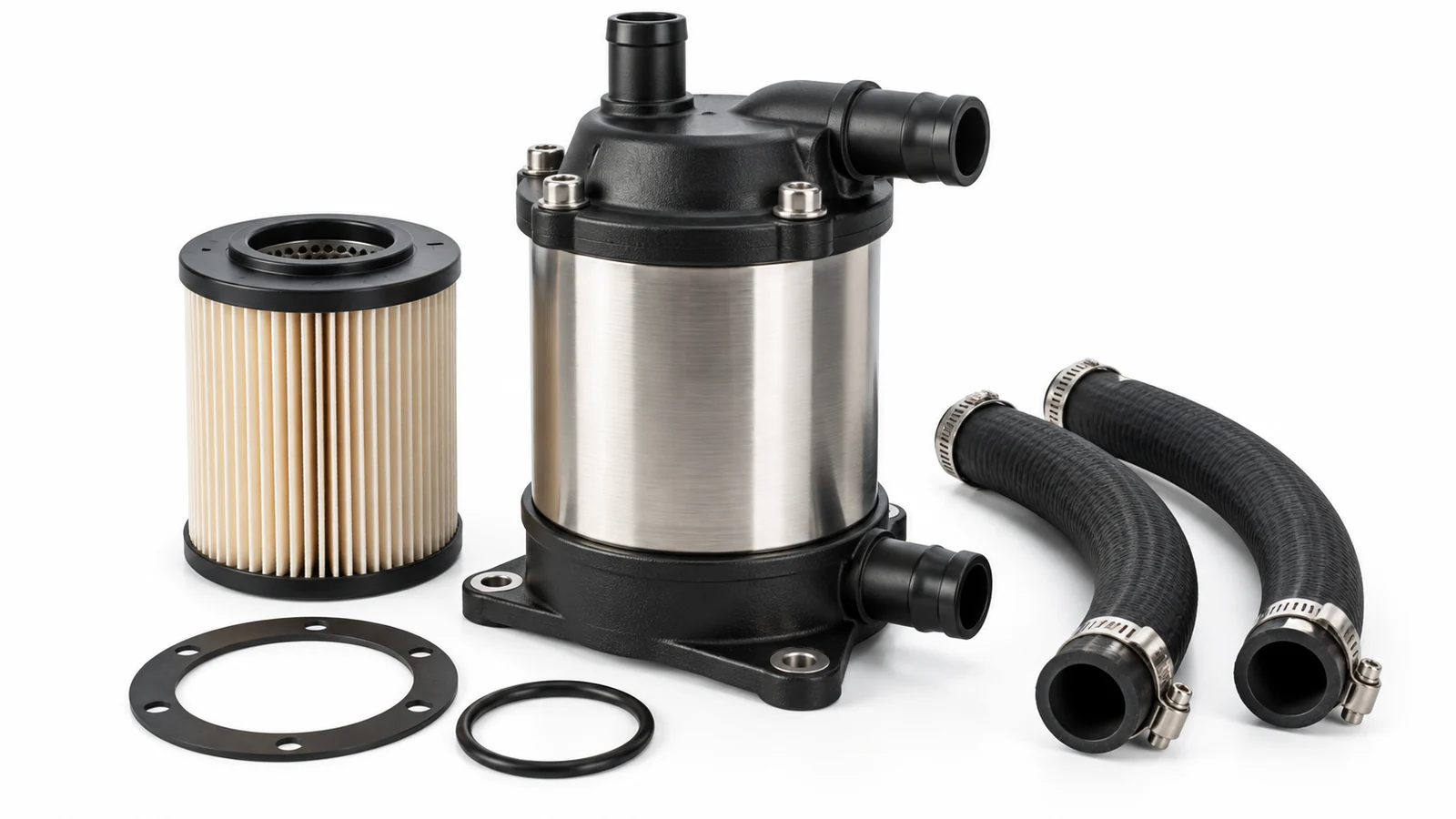
The approved catalogue records Cummins crankcase breather 3102665 as SK-00010-AV for QSX15 CM570 engines. Its published configuration includes a metal housing, filtration media, ventilation port, filter element and mounting holes. The catalogue identity does not replace an engine-specific check: send the complete engine serial number and confirm the hose-port orientation, mounting position and element supply scope against the correct Cummins parts information.
Inspect the complete ventilation path
Remove and inspect the inlet and outlet hoses for softening, collapse, carbon deposit and internal delamination. Check clamps, mounting isolators, gaskets and the oil-return or drain path. A new breather connected to a restricted hose will reproduce the pressure problem. If the arrangement returns vapour to the intake, inspect the downstream pipework for oil accumulation and verify that no unauthorised restriction has been added.
Define whether the RFQ is for an assembly or service element
Part descriptions can refer to a complete housing, a replaceable element or a service kit. State whether the requirement includes the filter element, cover, seals, mounting hardware, hoses and clamps. Ask the supplier to list every included component and any superseded reference. This prevents a low-priced element-only quotation from being compared with a complete assembly.
Service safely and keep the system clean
Stop and isolate the engine, allow hot surfaces to cool and follow the maker's handling procedure. Cap open hose ends, keep lint and gasket debris out of the crankcase and clean the mounting face without damaging it. After assembly, check for leaks and abnormal pressure at idle and under the specified operating condition. Record the date, running hours, installed reference and pressure result.
Plan breather maintenance by running hours
Generator and auxiliary engines can accumulate hours faster than propulsion engines. Add breather inspection and element replacement to the running-hours schedule, and keep a suitable service element on board when the vessel operates away from normal supply ports. A rapid repeat blockage should trigger investigation of engine condition rather than a shorter replacement interval alone.
Send a complete enquiry
Include engine model, serial number, control-module or build information, part number 3102665, quantity, photographs of the existing assembly and hose routing, measured symptoms, running hours, required documentation and delivery details. The approved product page and related generator-parts guide below provide the internal catalogue trail for the request.
For the business buyer
Confirm the intended vessel or facility, operating environment, quantity and required approval before requesting a quotation. Capacity, coverage and service interval should be matched to the risk rather than selected by headline price.
For technical experts
Verify the delivered model against the maker reference, rating, dimensions, materials, operating limits and certification scope. Record the serial or batch number and retain the manufacturer datasheet, declaration, test report and maintenance instructions in the vessel file.
Product comparison
Compare alternatives on certified performance, compatibility, installation requirements, inspection interval, spares availability and total life-cycle cost. A lower unit price is not a like-for-like comparison when approval documents or service support differ.
Request a Cummins breather quotationWant the full specification pack or a delivery quotation?
Enquire about the ferry