
AI-generated editorial illustration.
Not every spare part comes with a maker name stamped on it. The Sea Keepers approved catalogue holds two bush records that share the reference FR-26001001100: SK-00012-AV, which also carries the number 418772-02, and SK-00014. Both are published with their exact function, dimensions and material marked as unverified. That is deliberate. This guide explains how to turn a reference like this into a confirmed part before it is fitted to an engine.
What a bush does
A bush, or bushing, is a plain sleeve that gives a shaft or pin a replaceable wear surface. In a diesel engine bushes are found in connecting-rod small ends, rocker arms, camshaft and idler gear bores, governor linkages and pump drives. They may also act as spacers or locating sleeves. Because the same simple shape appears in so many places, two bushes that look alike can differ in material, wall thickness, oil-hole position or interference fit, and the wrong one can seize or turn in its bore.
Why one reference appears on two records
SK-00012-AV and SK-00014 both carry FR-26001001100. The additional 418772-02 number on SK-00012-AV suggests either a maker part number linked to the stores code or a different revision. Until the equipment manual confirms the link, treat FR-26001001100 as an internal stock reference rather than a guaranteed part number, and do not assume the two records are interchangeable.
Record where the bush came from
The most useful information is the location. Note the engine or gearbox maker, model and serial number, the assembly the bush was removed from and its position on the parts book exploded view if one is available. A bush from a rocker arm and one from a gear bore may share a diameter but not a material or tolerance.
Measure it properly
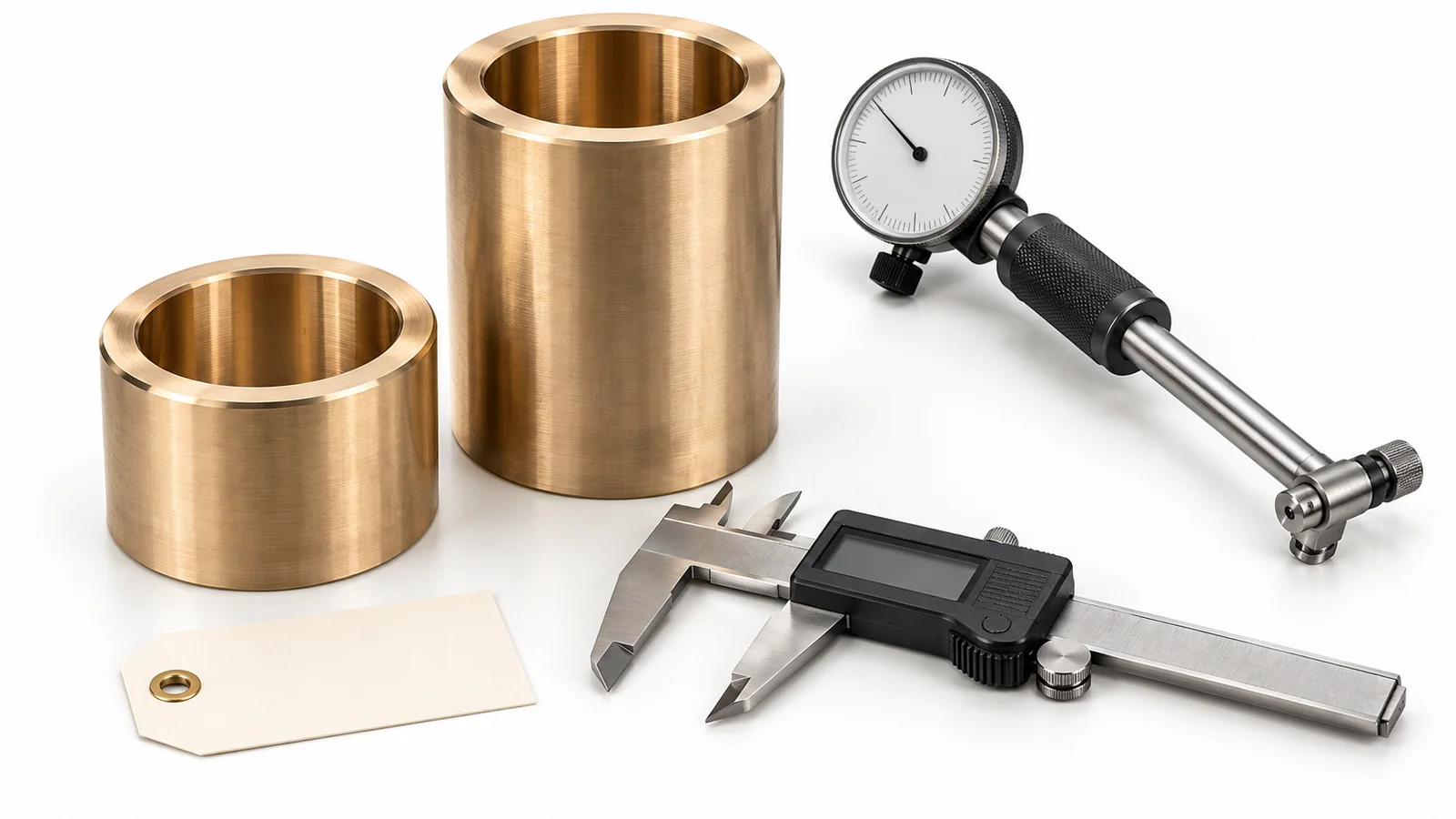
Clean the bush and measure the outside diameter, inside diameter and length with a micrometer or calibrated caliper, taking readings at several points and both ends to catch wear or taper. Record any chamfer, flange, oil hole, oil groove, split line or locating notch, and their positions. Note the material by appearance (bronze, steel-backed white metal, or polymer) and any markings. Measure the housing bore and the shaft as well, because the required fit depends on all three.
Photograph with a scale
Take clear photographs from the end, the side and inside the bore, with a ruler or caliper in the picture. Include a photograph of the part in its housing if it is still fitted. These pictures let a supplier compare the part with maker drawings and catch details that a list of numbers can miss.
Getting a confirmed match
With the location, dimensions and photographs, Sea Keepers can search maker catalogues for a matching part number or, where no catalogue match exists, quote a dimensionally equivalent bush made to the measured sizes. Any uncertainty is stated in the quotation rather than hidden, so the superintendent can decide whether to accept an equivalent or wait for an OEM confirmation.
Fitting checks
Before fitting, check the interference between the bush and housing, align any oil hole with the feed passage, and after pressing in, measure the inside diameter again because it can close up. Ream or hone only if the manual calls for it, then check the running clearance on the shaft. Keep the measured figures with the job record so the next order can be placed against confirmed data.
Send a complete enquiry
State the reference FR-26001001100 and, for SK-00012-AV, 418772-02, the equipment and position the bush came from, all measured dimensions, material, quantity, photographs, documentation needed and the delivery port. The approved product pages and guides linked below give the catalogue identity and wider context.
For the business buyer
Confirm the intended vessel or facility, operating environment, quantity and required approval before requesting a quotation. Capacity, coverage and service interval should be matched to the risk rather than selected by headline price.
For technical experts
Verify the delivered model against the maker reference, rating, dimensions, materials, operating limits and certification scope. Record the serial or batch number and retain the manufacturer datasheet, declaration, test report and maintenance instructions in the vessel file.
Product comparison
Compare alternatives on certified performance, compatibility, installation requirements, inspection interval, spares availability and total life-cycle cost. A lower unit price is not a like-for-like comparison when approval documents or service support differ.
Request a bush match and quotationWant the full specification pack or a delivery quotation?
Enquire about the ferry