
AI-generated editorial illustration.
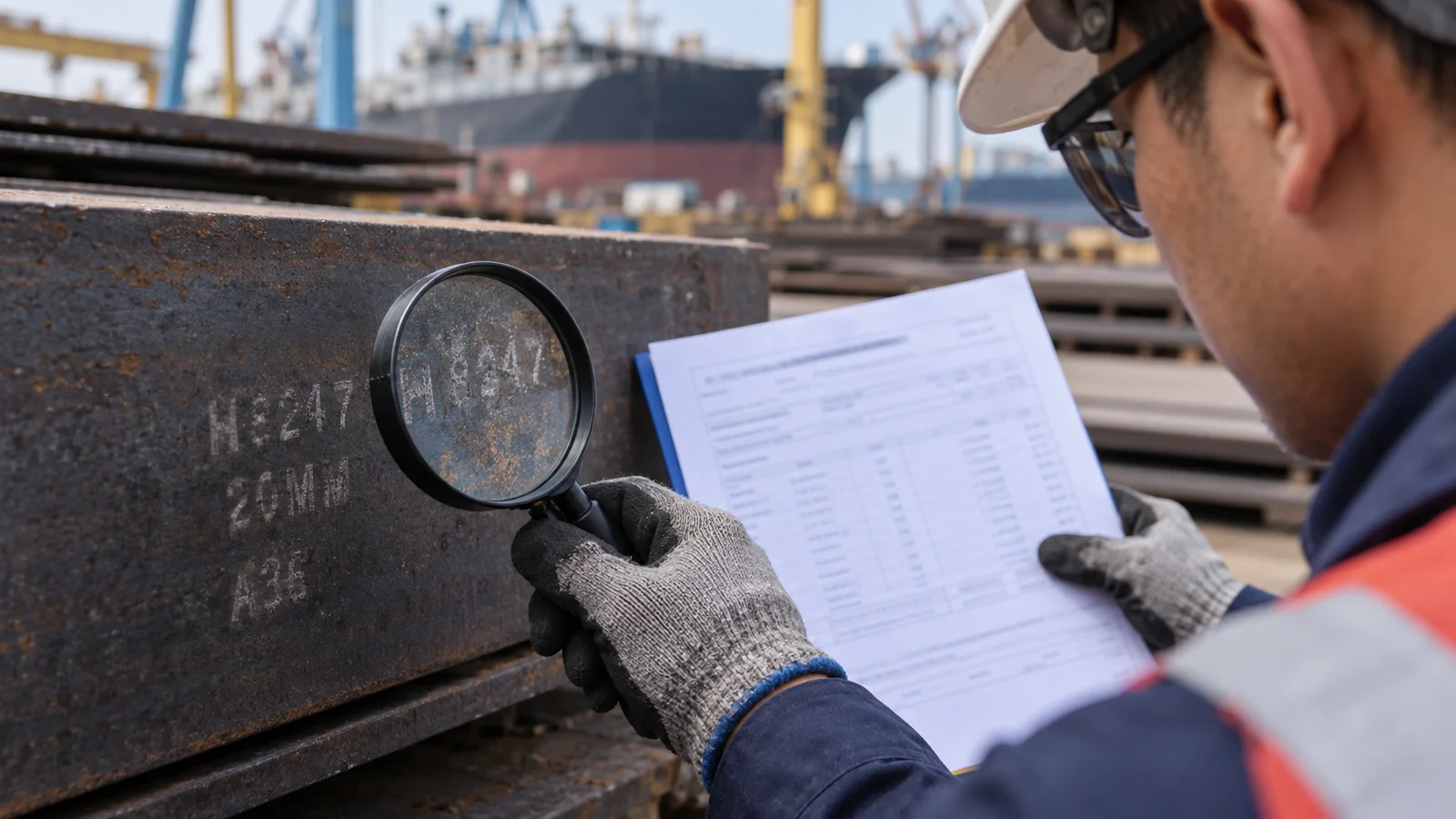
How to Verify Marine Grade Steel Certificates Before Fabrication is a commercial problem, not just a definition. Check the certificate number, heat and cast identifiers, grade, thickness, yield strength, tensile strength, elongation, impact-test temperature and results. Confirm the marks on the plate match the certificate and packing list.
For the business buyer
QA teams and fabrication engineers need a clear decision path: define the asset and operating consequence, identify the information missing from the request, and measure the effect on cost, schedule, safety and compliance. Sea Keepers can build a material register linking certificates, plate marks, nesting files, inspection points and the approved repair or newbuild drawing.
For technical experts
Record the approved drawing or equipment reference, revision, material or performance requirement, inspection point, certificate and acceptance criterion. Keep the technical decision with the responsible naval architect, chief engineer, class or flag authority where applicable. Do not substitute a grade, model or certificate on a name match alone.
Comparison before purchase or fabrication
A supplier scan without heat traceability is weaker evidence than a certificate linked to each plate bundle and accepted by the project class process. Independent testing is a safeguard, not a substitute for a controlled supply chain.
Sea Keepers engineering and procurement response
Sea Keepers can build a material register linking certificates, plate marks, nesting files, inspection points and the approved repair or newbuild drawing. The team can review the specification, prepare an RFQ, coordinate suppliers, check documentation and connect the decision to naval architecture, structural engineering, production CAD, shipbuilding, repair or marine equipment supply.
Discuss your marine procurement or engineering projectWant the full specification pack or a delivery quotation?
Enquire about the ferry