
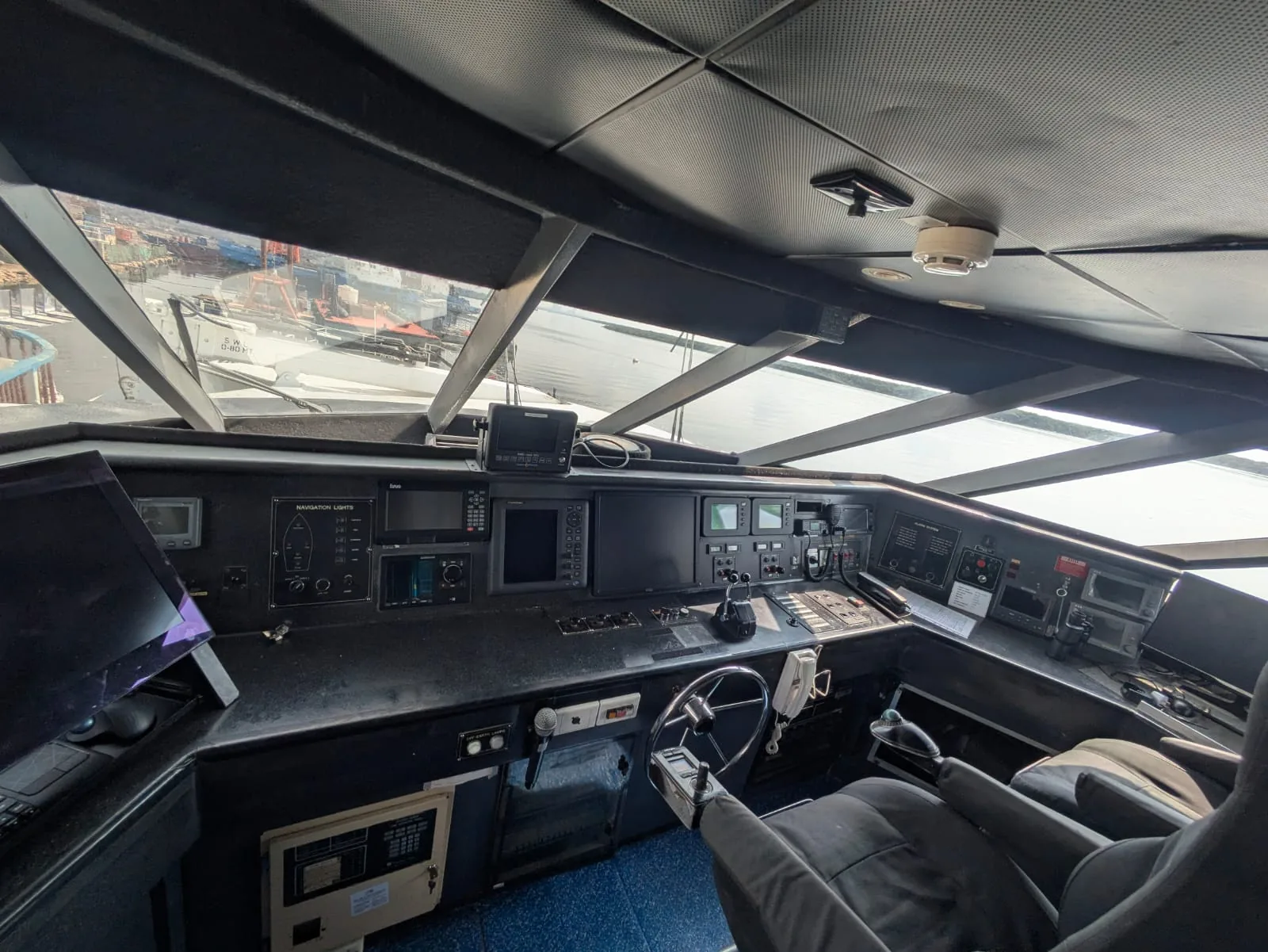
Buying a used passenger ferry is very different from buying a cargo hull. Passenger vessels are certified around people — seat numbers, evacuation, fire protection, stability in damaged condition — and the paperwork can matter as much as the steel or aluminium. This guide sets out the steps that experienced operators follow so that a good vessel at a good price does not turn into an expensive surprise.
Start with the route, not the vessel
Before looking at listings, fix the parameters of your operation: crossing distance, sea state, passenger numbers per sailing, port draft limits and berth lengths, and the regulations of the flag you intend to operate under. A 35 m fast ferry that is ideal for a 40-mile island crossing may be the wrong tool for a 5-mile river shuttle where a slower, shallower vessel earns more. Knowing these numbers lets you filter listings quickly on length, draft, capacity and speed.
What to check on a condition survey
Always commission an independent surveyor, ideally one with fast-craft experience. On an aluminium vessel the survey should cover plating thickness and any corrosion at the waterline and around dissimilar-metal fittings, weld cracking at frames and engine beds, the condition of the shafts, propellers and rudders, and the state of the sea chests and through-hull fittings. Machinery items include a review of engine hours and service records, oil analysis, a sea trial at working load, and a check of the generator, switchboard and steering. Ask for the fire detection and suppression test records, life raft service dates and the lifejacket inventory — these are cheap to fix but easy to forget.
Class, flag and what they allow you to do
A vessel's class society and flag state together decide where it may trade and with how many passengers. Some buyers keep the existing flag and class; most will reflag into their own administration, which triggers a survey and often a review of the stability booklet, fire plan and life-saving arrangement. Check the age limits your flag applies to imported passenger tonnage before you buy: several countries restrict older second-hand vessels, and a few effectively bar them. Sea Keepers' naval architects handle plan approval, stability and survey work for reflagging and class entry, so buyers know the vessel will be accepted before completing the purchase.
Offer, memorandum of agreement and escrow
Second-hand vessel sales normally follow the Norwegian Saleform: the buyer makes an offer subject to inspection and documentation, a memorandum of agreement is signed, and a deposit — typically 10% — is placed in escrow with a bank or law firm. Delivery is against payment of the balance, a bill of sale, deletion certificate from the old registry and a clean record of encumbrances. Buying directly from the seller rather than through a chain of brokers keeps the commission out of the price and shortens the negotiation.
Delivery: own keel or heavy-lift
For a fast ferry under 40 m, an own-keel delivery voyage with a professional delivery crew is usually the cheapest option within about 2,500 nautical miles. Budget for crew, bunkers, insurance, port and canal dues, and a weather window; in the Arabian Sea that means avoiding the south-west monsoon between June and September. For longer passages, heavy-lift or semi-submersible shipment protects the hull and machinery and gives a firm delivery date. Either way, ask the seller for a delivery quotation to your port before you make an offer so the landed cost is clear.
Budget for the refit you actually need
Even a well-maintained vessel usually needs work to suit a new operator: seat plan, livery, signage in the local language, ticketing equipment, air-conditioning capacity for a hotter climate, or additional life rafts to reach a higher passenger certificate. Sea Keepers can quote this refit work in Karachi before delivery, which is often cheaper and faster than doing it after arrival.
Sea Keepers currently has a 35 m aluminium monohull fast ferry for sale, refitted in 2018–2019 and lying in Karachi. The listing includes the full specification, photo gallery and a downloadable spec sheet, and our team can arrange inspection, survey and delivery.
View the full listing, specification and photo galleryWant the full specification pack or a delivery quotation?
Enquire about the ferry