
AI-generated editorial illustration.
A search for ‘fast ferry for sale’ returns everything from 12-metre water taxis to 100-metre car ferries. Before you spend money on surveys and travel, it pays to understand what a high speed craft actually is, how it is certified, and which parts of the vessel decide whether it will earn on your route. This guide is written for operators and investors comparing second-hand high speed passenger vessels.
What ‘high speed craft’ means for certification
Under the IMO High Speed Craft Code, a craft is ‘high speed’ when its maximum speed exceeds 3.7 times the displacement volume (in cubic metres) raised to the power 0.1667, in metres per second. For a 90-tonne aluminium ferry that threshold is roughly 15 knots, so a vessel designed for 28 knots sits comfortably inside the definition. Why it matters: HSC-certified vessels are surveyed against a specific structural, fire and evacuation standard, and many flag states will only accept a fast passenger vessel onto their register if that pedigree is intact. Ask for the original build standard and the most recent survey record before anything else.
Hull material and structure
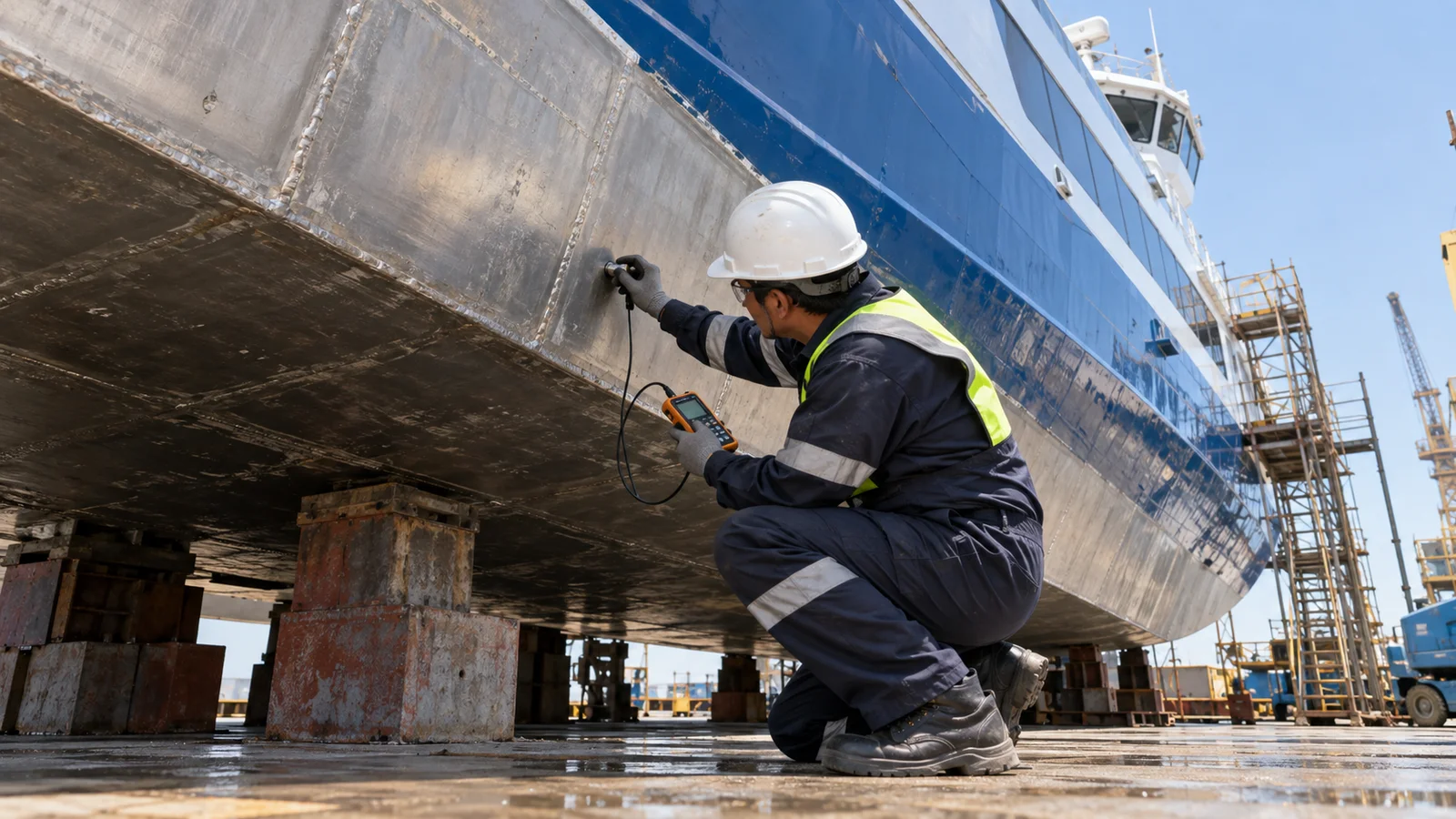
Almost every fast ferry under 50 metres is built in marine-grade aluminium because weight is speed. The questions to ask are about plating thickness at the waterline, weld condition at frames and engine beds, corrosion around dissimilar-metal fittings, and whether the hull has ever been repaired after grounding or collision. A refit history with photographs, as on the 35 m monohull Sea Keepers currently has for sale, is worth more than a fresh coat of paint.
Machinery: engines, gearboxes and propulsion
High speed passenger vessels are either propeller-driven or waterjet-driven. Propeller installations, such as a Caterpillar C32 turning a fixed-pitch five-blade propeller, are simpler to maintain in regions with limited waterjet service support. Check engine hours since overhaul, oil-analysis history, cooling-water and exhaust condition, gearbox clutches and shaft alignment. Insist on a sea trial at working load and compare the achieved speed with the design figure.
Design speed versus service speed
A design speed of 28.3 knots at 75% engine load is a realistic operating figure; a brochure ‘maximum speed’ measured light and clean is not. Service speed at your typical passenger load, in your typical sea state, with a hull that is due for antifouling, is what should go into your timetable. Build a 10–15% margin into crossing times until you have operated the vessel for a season.
Passenger spaces and evacuation
Count the seats, then read the safety certificate: the number of persons the vessel may carry is set by life-saving appliances, evacuation analysis and stability, not by the upholstery. Airline-style seating in enclosed saloons, an internal stairway between decks, open foredeck and aft boarding space are the layout most operators want on 20–60 nautical mile routes because they allow fast turnarounds.
Questions to put to the seller
Ask for the general arrangement drawing, stability booklet, class and flag status, last docking report, engine-hours statement, life raft and fire-system service dates, and a delivery quotation to your port. A seller who is handling the sale directly, without a broker chain, should be able to send all of this in a single specification pack within a working day.
Sea Keepers currently offers a 35.4 m aluminium monohull high speed passenger ferry for sale, refitted in 2018–2019 and lying in Karachi, with inspection, independent survey and delivery arranged by our naval architects.
View the 35m passenger ferry for sale — full specification and photosWant the full specification pack or a delivery quotation?
Enquire about the ferry