
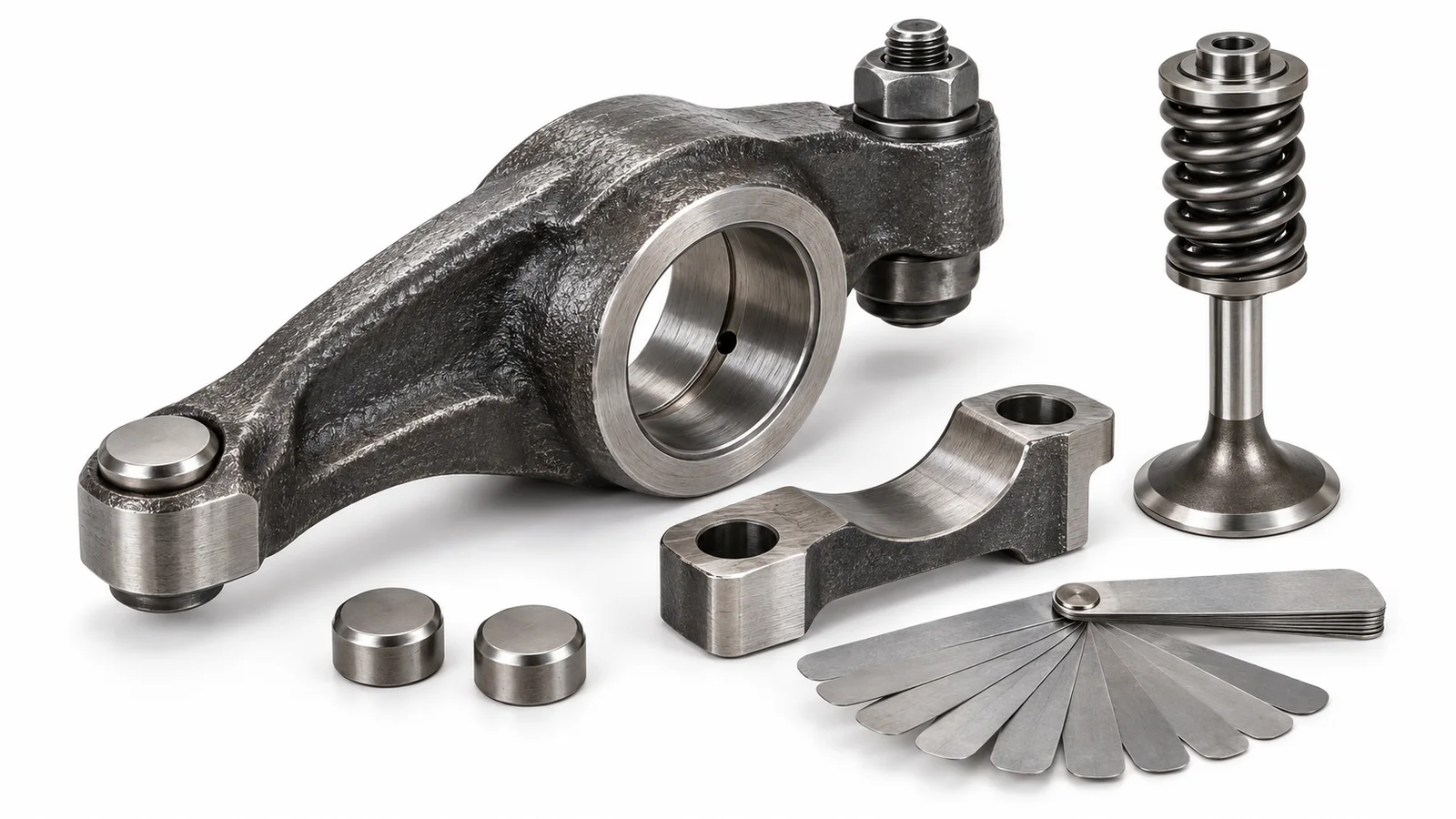
AI-generated editorial illustration.
Every time an inlet or exhaust valve opens, the full valve-spring load and the shock of the rocker motion pass through a small hardened contact piece. On many Caterpillar engines that piece is a separate button or insert in the rocker arm, so it can be replaced without scrapping the arm. The Sea Keepers approved catalogue records the Cat rocker-arm button 258-8721 as SK-00009-AV, listed in low-alloy and alloy steel, approximately 4.0 inches long and 0.5 inch high. This guide covers what the button does, how its wear shows up and how to order it with confidence.
What the button does in the valve train
The camshaft lifts a follower and pushrod, the rocker arm pivots on its shaft, and the button at the rocker tip presses on the valve bridge or valve stem. The button concentrates contact on a hardened, correctly shaped surface so that the softer rocker body does not wear and the force is applied along the valve axis. Where the button swivels or carries an oil passage, it also spreads load and keeps the contact lubricated. If the button wears flat, pits or loses its profile, the contact point moves, side load on the valve guide increases and valve lash drifts.
Wear shows up first as lash drift
A healthy valve train holds its lash setting between adjustments. When lash on the same valves keeps opening up, or one cylinder needs much more correction than the others, the cause is wear somewhere in the load path: button, valve bridge, valve-stem tip, pushrod ends, follower or cam lobe. Record every lash reading by cylinder and valve at each adjustment so that the trend points to the worn position instead of the whole engine. Increased valve-train noise at idle, a ticking that changes with speed and rising exhaust temperature on one cylinder are the usual early symptoms.
Inspect the button during a lash check
With the cylinder at the correct position for adjustment, remove the cover, wipe the button and bridge contact and inspect them with a light and magnifier. Look for a concave wear pocket, pitting or spalling, cracking at the edges, scuffing that indicates poor lubrication and an off-centre contact mark on the bridge. Pitting or a step in the contact surface means the button should be replaced; resetting lash over a damaged face only restores the reading until the damage grows. Check the matching bridge and valve-stem tips at the same time, because a worn button usually leaves a mark on its partner.
Replace as a set and find the cause
If one button is worn beyond its limit, inspect all buttons on that bank and plan to replace at least the affected cylinder's set. Look for the reason: low oil pressure at the rocker shaft, blocked oil drillings, wrong oil grade, extended oil-change intervals, excessive lash left in service, or a cam or follower that is already damaged. The related guides on camshaft, follower and bush wear explain how to inspect the rest of the train before reassembly.
Fitting and setting
Install the button in the orientation shown in the service manual, using the retaining method specified for that rocker arm, and confirm free movement where the button is designed to swivel. Lubricate the contact with clean engine oil, refit the rocker assembly, tighten the rocker shaft bolts to the specified torque and set lash with the engine in the cold condition and cylinder positions the manual gives. Recheck lash after the first running period, because new contact surfaces bed in.
Material and genuine-part checks
The approved record lists low-alloy and alloy steel. A substitute button must match the hardness, case depth and surface finish, not only the outline; a soft button wears in days and can damage the bridge and valve stem. Ask for the maker's packaging and part marking or, for an alternative supply, a hardness and dimension report. Treat unusually low prices on hardened valve-train parts with caution and follow the counterfeit-parts guidance linked below.
Confirm fitment before ordering
The catalogue lists 258-8721 against several Cat engine and equipment families, and the record notes that exact fitment needs confirmation. Send the engine model, serial-number prefix and arrangement number so that the rocker-arm group can be identified from the parts book. State the quantity per cylinder and the number of cylinders to be done, add photographs of the removed button and rocker arm, and list any bridges, valve-stem caps, rocker shafts or gaskets required for the same job. The approved SK-00009-AV page and the guides below provide the catalogue identity and the wider valve-train context.
For the business buyer
Confirm the intended vessel or facility, operating environment, quantity and required approval before requesting a quotation. Capacity, coverage and service interval should be matched to the risk rather than selected by headline price.
For technical experts
Verify the delivered model against the maker reference, rating, dimensions, materials, operating limits and certification scope. Record the serial or batch number and retain the manufacturer datasheet, declaration, test report and maintenance instructions in the vessel file.
Product comparison
Compare alternatives on certified performance, compatibility, installation requirements, inspection interval, spares availability and total life-cycle cost. A lower unit price is not a like-for-like comparison when approval documents or service support differ.
Request a Cat rocker-arm button quotationWant the full specification pack or a delivery quotation?
Enquire about the ferry