
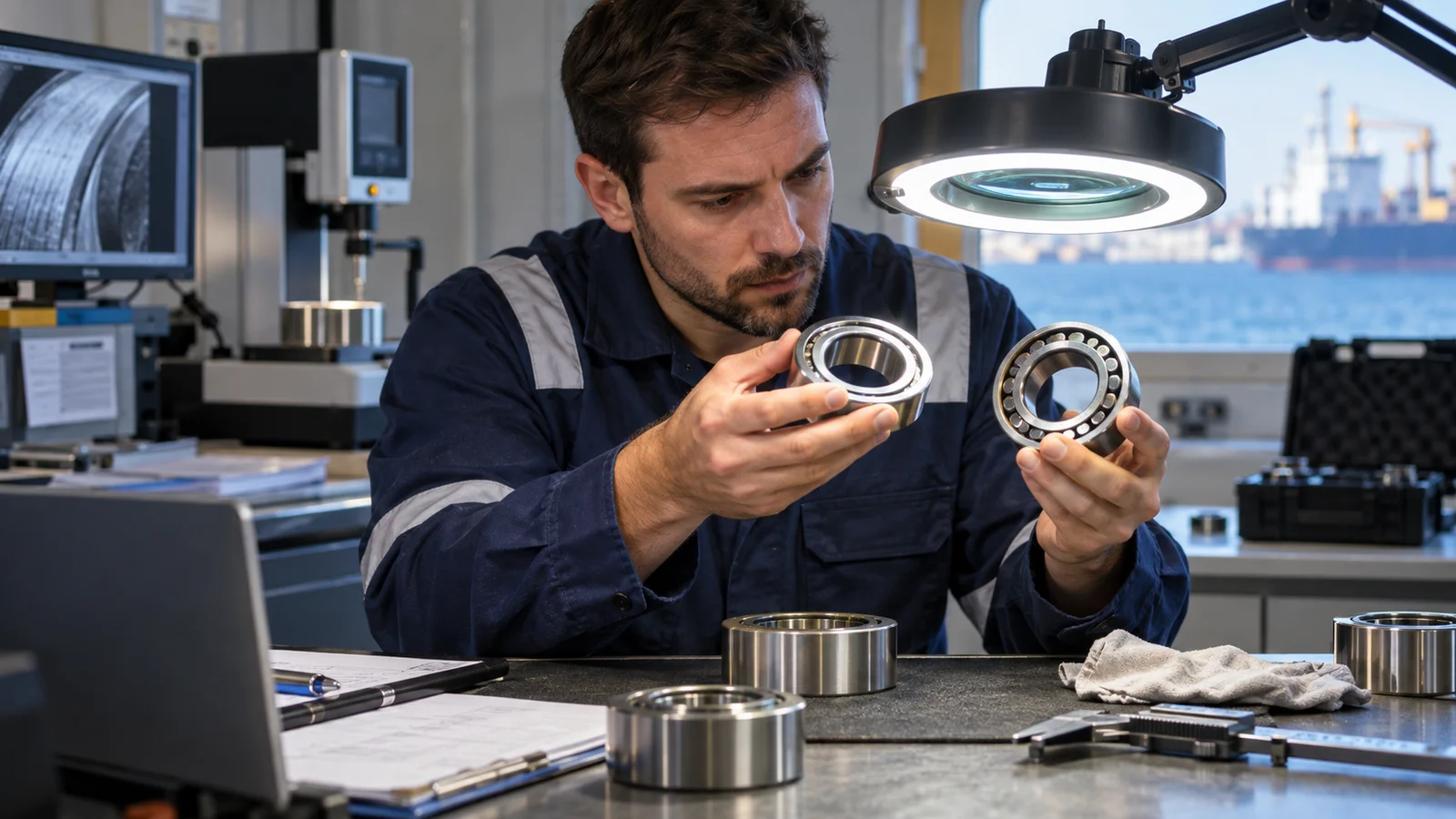
AI-generated editorial illustration.
How to Avoid Counterfeit Marine Equipment and Spare Parts is a commercial problem, not just a definition. Warning signs include an unexplained price gap, altered packaging, missing heat or serial numbers, generic certificates, inconsistent machining and a seller who cannot identify the supply chain.
For the business buyer
Purchasers and chief engineers need a clear decision path: define the asset and operating consequence, identify the information missing from the request, and measure the effect on cost, schedule, safety and compliance. Require maker references, certificate validation, inspection photographs, batch records and a written warranty. Sea Keepers can qualify suppliers and source against the equipment reference.
For technical experts
Record the approved drawing or equipment reference, revision, material or performance requirement, inspection point, certificate and acceptance criterion. Keep the technical decision with the responsible naval architect, chief engineer, class or flag authority where applicable. Do not substitute a grade, model or certificate on a name match alone.
Comparison before purchase or fabrication
An authorised OEM channel offers traceability and support; a qualified compatible manufacturer may offer value with documented equivalence; an unverified marketplace listing offers neither assurance nor accountability.
Sea Keepers engineering and procurement response
Require maker references, certificate validation, inspection photographs, batch records and a written warranty. Sea Keepers can qualify suppliers and source against the equipment reference. The team can review the specification, prepare an RFQ, coordinate suppliers, check documentation and connect the decision to naval architecture, structural engineering, production CAD, shipbuilding, repair or marine equipment supply.
Discuss your marine procurement or engineering projectWant the full specification pack or a delivery quotation?
Enquire about the ferry