
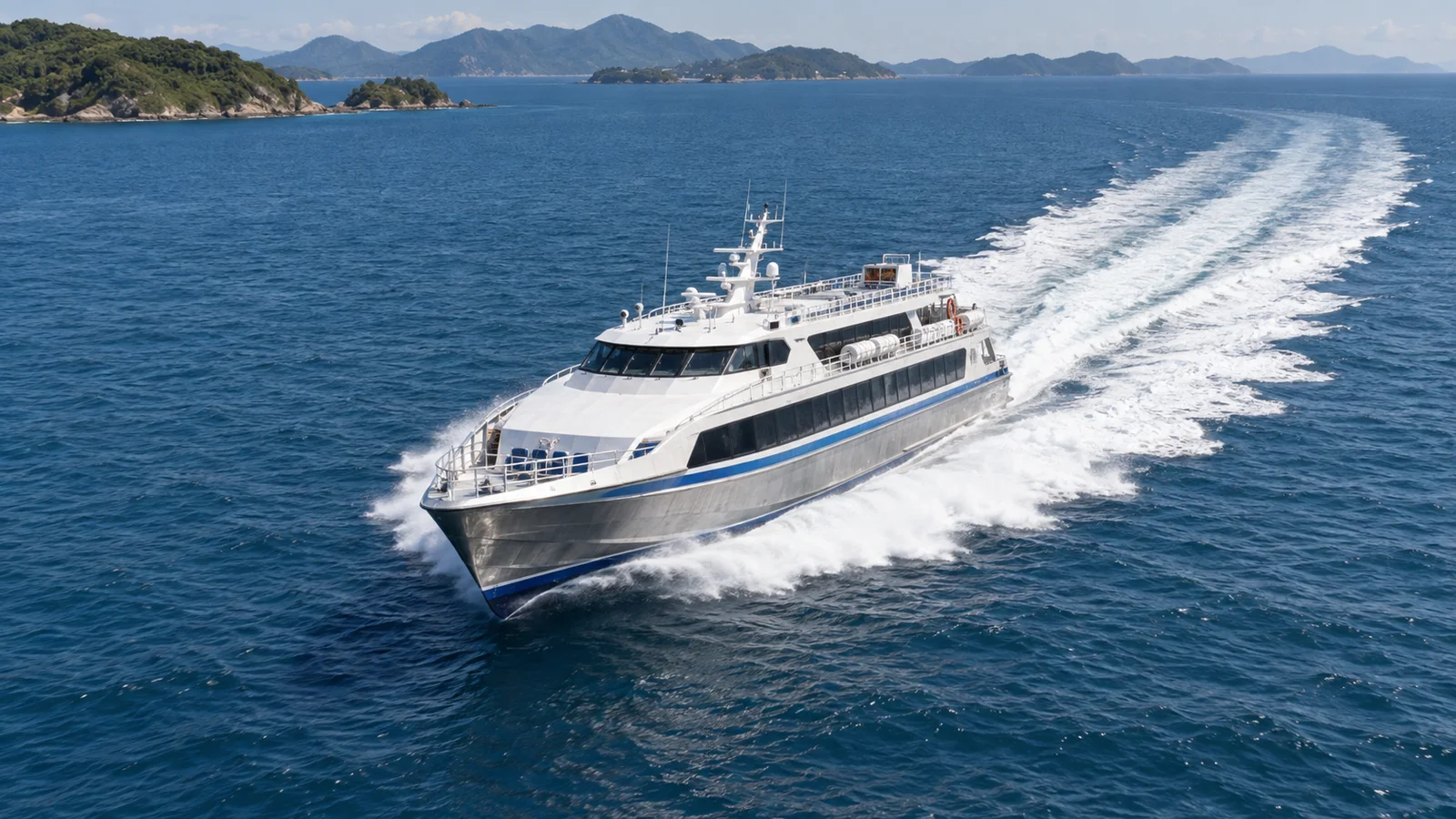
AI-generated editorial illustration.
Speed is the reason operators pay more for a high speed passenger ferry than for a conventional boat of the same size. It converts directly into more sailings per day, shorter crossing times that passengers will pay a premium for, and the ability to hold a timetable in weather that leaves slower vessels in port. This article works through the numbers for a 28 knot passenger ferry so you can judge whether the speed pays for itself on your route.
Crossing times at 28 knots
At a service speed of 28 knots, 20 nautical miles takes about 43 minutes, 40 nautical miles about 86 minutes and 60 nautical miles about two hours and ten minutes. A conventional 12-knot boat needs 100 minutes, 200 minutes and five hours for the same crossings. On a 40-mile island route, the fast ferry makes a return trip in the time the slow boat makes one crossing.
Sailings per day and seat revenue
Add 20 minutes of turnaround at each end. On a 40-mile route a fast ferry can complete four to six single crossings in a 12-hour operating day; a slow boat manages two. With around 200 seats, that is 800 to 1,200 seats offered per day against 400. Even at a lower load factor, the fast ferry’s daily revenue is higher, and it needs fewer vessels to cover the timetable.
Fuel cost per crossing
Fuel is the price of speed. As a planning figure, a 1,044.5 kW Caterpillar C32 at 75% load burns roughly 180–200 litres per hour, so a 40-mile crossing costs about 300 litres including manoeuvring. Divide by passengers carried and the fuel cost per seat is modest compared with the fare premium fast services command. Confirm the figure on the vessel’s own sea trial.
Speed and sea state
A 28 knot design speed is quoted at 75% load in moderate conditions. In a short, steep sea the master will reduce speed for passenger comfort and structural loads. Deep-V aluminium monohulls hold speed better in head seas than flat-bottomed craft, which is why they dominate exposed island routes. Build a seasonal timetable with realistic speeds rather than the brochure figure.
Maintenance planning
High speed craft work hard. Budget for annual docking, antifouling, propeller and shaft inspection, engine servicing by hours, and window and seat renewal on a cycle. A refitted vessel with fresh machinery history and documented maintenance is worth paying for because it starts that cycle from a known point.
Sea Keepers has a 28.3 knot, 35.4 m aluminium monohull passenger ferry for sale, refitted 2018–2019 and lying in Karachi. Ask for the specification pack and a delivery quotation to your port.
View the 35m passenger ferry for sale — full specification and photosWant the full specification pack or a delivery quotation?
Enquire about the ferry