
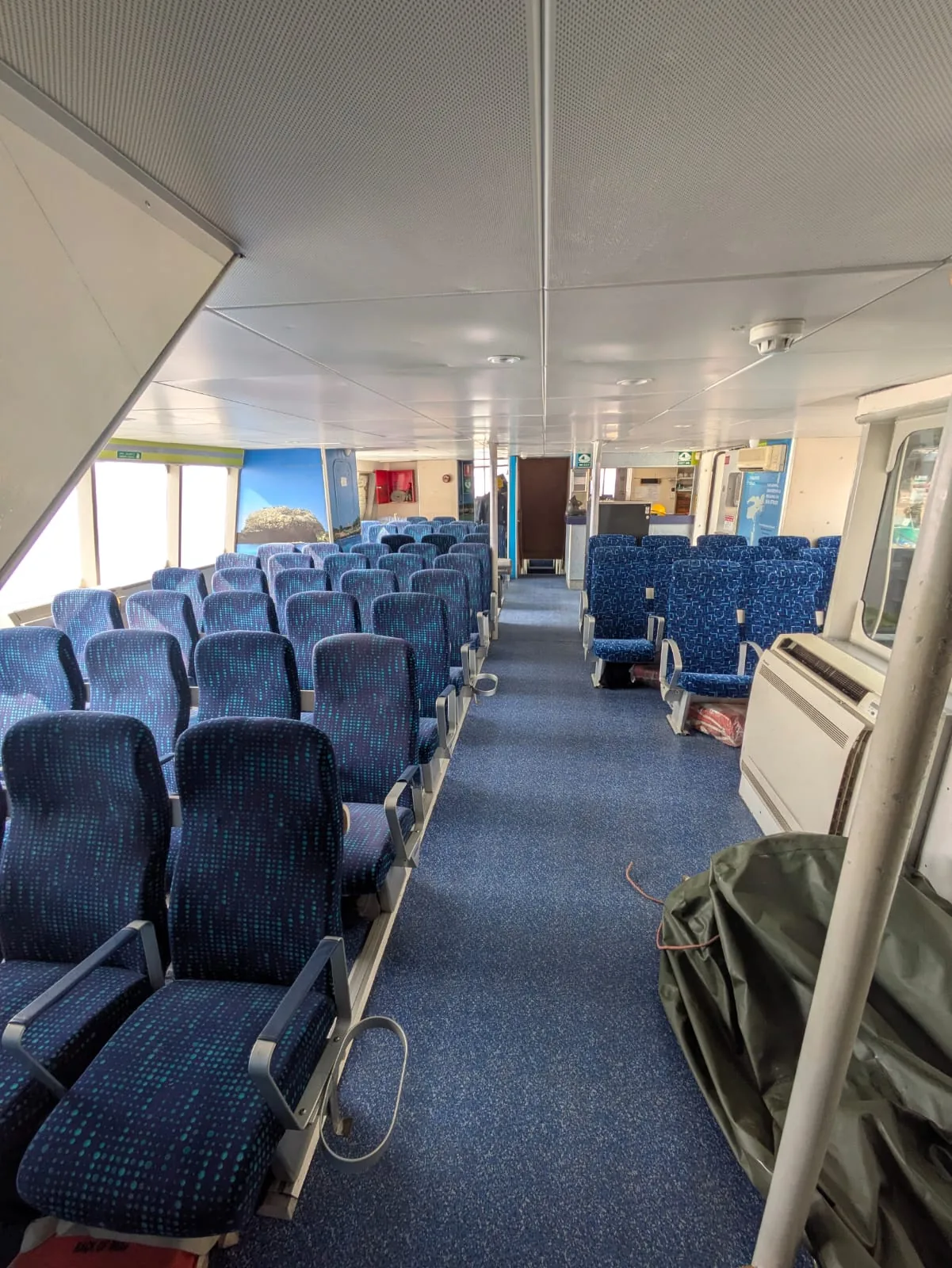
Operators searching for a 200 passenger ferry for sale are usually solving a specific problem: a route where 60–100 seat boats are full at peak times, but a 400-seat vessel would sail half empty. A 35 m fast monohull carrying around 200 passengers, with life-saving appliances for 220 persons, is the classic answer for island and coastal crossings of 20 to 60 nautical miles. Here is how to check that the size really fits.
Capacity is a certificate, not a seat count
The number you may carry is set by the passenger certificate your flag issues, which depends on life-saving appliances, evacuation arrangements and stability. Seats can be added or removed within those limits. When you compare a 35m passenger ferry for sale with a smaller boat, compare the certified persons figure and the seat plan separately, and decide which one you would change.
Crossing time and sailings per day
At a service speed of 28 knots, a 20-mile crossing takes about 45 minutes, a 40-mile crossing about 90 minutes and a 60-mile crossing just over two hours. Add 15–20 minutes at each end for boarding and disembarkation and you can count sailings per day for your route. Revenue is seats multiplied by sailings multiplied by load factor, so a 200-seat vessel that can make six crossings a day often out-earns a 400-seat vessel that makes three.
Berths, draft and turning space
A 35.4 m overall length with a 7.3 m beam fits the majority of island jetties and small ferry terminals without dredging or fender changes, and a maximum draft of 2.10 m opens shallow approaches that keep larger ferries out. Check your berths for length, water depth at low tide and the space needed to turn, and ask the seller for the general arrangement drawing so your port engineer can confirm the fit.
Fuel range and refuelling
Around 9,800 litres of fuel capacity is enough for several return crossings on a 40-mile route before bunkering, which matters where fuel is only available at one end. Longer routes, such as Dar es Salaam to Pemba or Gulf crew-transfer runs, still fall well inside the range at economical load.
Load factor and the seasonal peak
Do not size for the busiest day of the year. A 200-seat vessel running at a 60–70% average load factor with a second sailing at peak times is usually more profitable than a larger vessel bought for the peak. Where demand is growing, the right approach is a second vessel of the same class, which also gives you cover during docking.
Crew, maintenance and running cost
A single-engine or twin-engine 35 m ferry runs with a small crew, and Caterpillar and Perkins machinery can be serviced almost anywhere in Africa, the Gulf and Asia. Compare fuel burn per passenger-mile and maintenance cost between candidate vessels, not just purchase price.
Sea Keepers’ current listing is exactly this class of vessel: a 35.4 m aluminium monohull fast ferry, 220 persons life-saving capacity, 28.3 knots design speed, refitted in 2018–2019 and lying in Karachi. Ask for the specification pack and a delivery quotation to your port.
View the 35m passenger ferry for sale — full specification and photosWant the full specification pack or a delivery quotation?
Enquire about the ferry