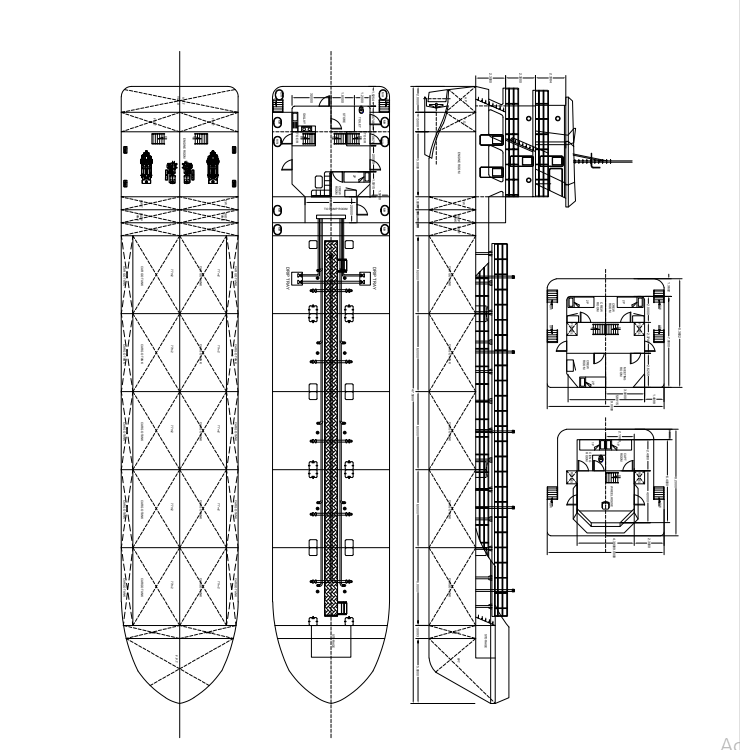
An Oil Tanker is a specialized marine vessel designed for the bulk transportation of crude oil or refined petroleum products across oceans and coastal routes. These ships are a critical component of the global energy supply chain, enabling the efficient movement of large volumes of oil between extraction sites, refineries, and distribution ports.
Oil tankers are engineered with double-hull construction to minimize environmental risks in case of accidental damage. The hull is divided into multiple cargo tanks equipped with inert gas systems to reduce flammability risks. Depending on capacity, tankers are classified as Aframax, Suezmax, Very Large Crude Carriers (VLCC), or Ultra Large Crude Carriers (ULCC).
Designed for long-distance, heavy-load operations, oil tankers prioritize safety, fuel efficiency, and environmental compliance. They feature advanced navigation systems, automated cargo handling pumps, and efficient ballast water management systems.
Oil tankers are used globally for transporting crude oil from extraction points to refineries, and for distributing refined products such as diesel, gasoline, and jet fuel. They serve commercial, industrial, and strategic military purposes.
Equipped with double-hull protection, fire suppression systems, inert gas systems, and advanced navigation technologies, oil tankers are designed to meet strict International Maritime Organization (IMO) safety regulations and prevent environmental hazards.
Oil tankers enable the cost-effective and secure transportation of vast oil quantities over long distances, supporting global energy demands while maintaining high safety standards.
As the backbone of maritime oil logistics, oil tankers combine capacity, safety, and efficiency to ensure the steady flow of energy resources worldwide.